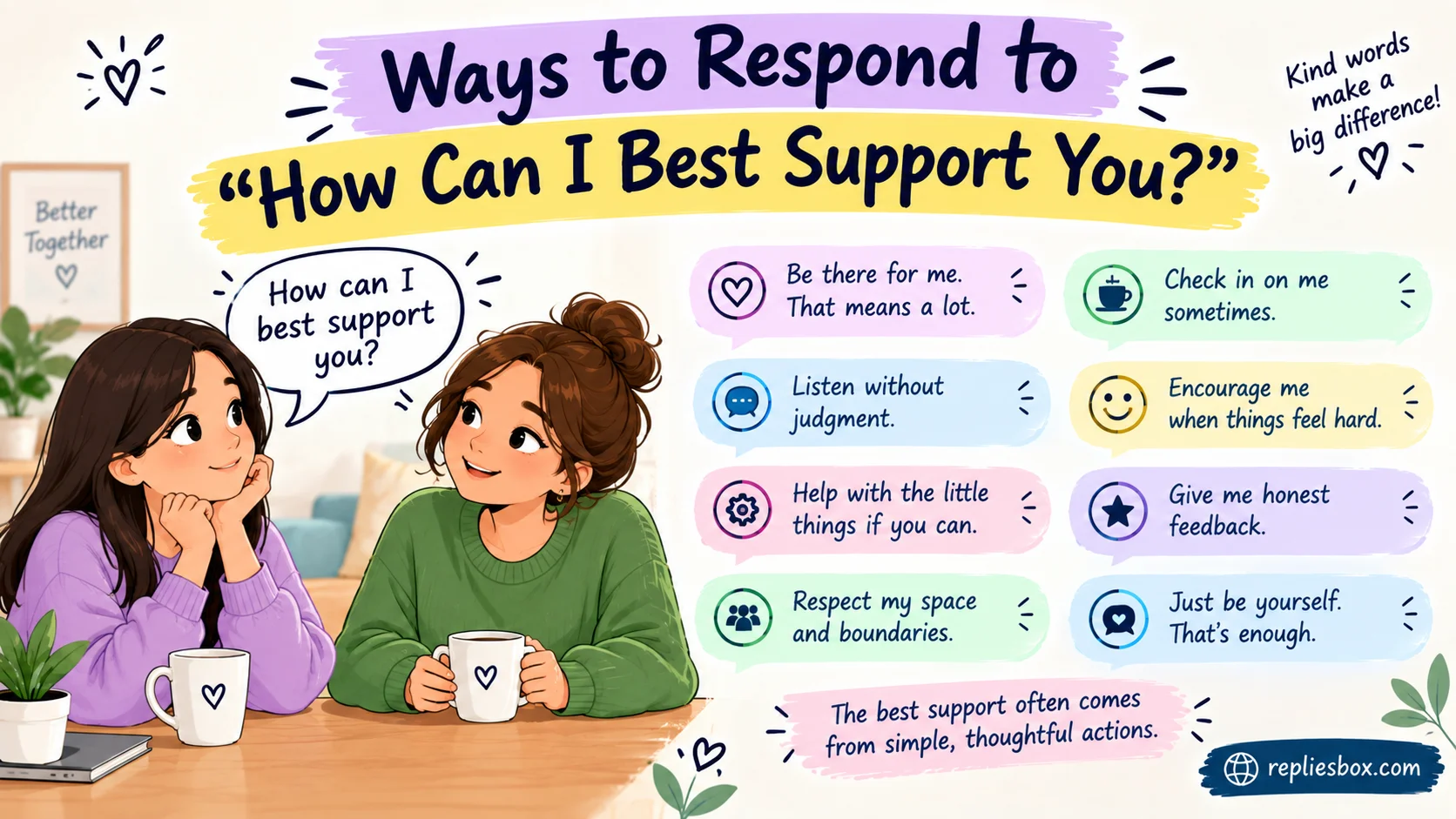
“How can I best support you?” is often asked when someone genuinely wants to help, but knowing what to say in response is not always easy. You might need someone to listen, a little encouragement, practical help, or simply some time to yourself. Your answer should reflect what would actually make things easier for you.
The best ways to respond to “How can I best support you?” depend on the person and the situation. A close friend may need a more personal answer, while a coworker might appreciate something simple and practical. If you are not sure what you need, it is also perfectly fine to say that honestly.
This guide shares natural responses for different situations, including short, polite, caring, funny, professional, and heartfelt replies. Whether you want someone to listen, give you space, help with something specific, or simply stay by your side, you can find a response that feels genuine and easy to say.
Read More: Heartfelt & Natural Responses to “Happy Thanksgiving to You and Your Family”
When You Just Need Someone to Listen
Sometimes support does not mean fixing anything. You may already know what you want to do but need someone who will listen without interrupting, judging, or immediately offering solutions. In this situation, being clear about that need can actually make the conversation easier. A response like this tells the other person that their presence matters more than their advice.
Meaning
It means you would appreciate having someone listen while you talk through what is on your mind.
Tone
Caring, honest, calm, and direct.
Example
Friend: How can I best support you?
You: Honestly, just listen to me for a little while. I don’t really need advice right now.
Best Use
Use this with a close friend, partner, family member, or anyone you trust with something personal.
When You Want Some Encouragement
There are times when you know what you need to do but lack confidence or motivation. Asking for encouragement lets the other person know that you are not necessarily looking for them to solve the problem. You simply want someone in your corner while you handle it yourself.
Meaning
You are asking for emotional encouragement rather than practical help.
Tone
Warm, sincere, and appreciative.
Example
Sister: How can I best support you?
You: Just remind me that I can handle this when I start doubting myself.
Best Use
This works well when facing a difficult decision, stressful task, personal goal, or challenging period.
When You Need Practical Help
If there is something specific the other person can do, it is usually better to say it clearly. People sometimes want to help but do not know exactly what would be useful. A practical response gives them something concrete to do instead of making them guess.
Meaning
You are asking for direct, practical assistance with a specific need.
Tone
Clear, grateful, and straightforward.
Example
Friend: How can I best support you?
You: If you have time, could you help me organize everything I need to get done this week?
Best Use
Use this when you need help with errands, planning, work, studying, moving, organizing, or another specific task.
When You Need Some Space
Support does not always mean spending more time together. Sometimes the kindest thing someone can do is give you room to think, rest, or process your feelings privately. You can communicate that without pushing the person away.
Meaning
You appreciate their concern but need some personal space at the moment.
Tone
Respectful, gentle, and honest.
Example
Partner: How can I best support you?
You: I appreciate you asking. I think I just need a little space tonight to clear my head.
Best Use
This is especially useful when you are overwhelmed and do not want to have a long conversation.
Watch the tone: Add appreciation when asking for space so the message does not sound like rejection.
When You Want Them to Check In Later
You may not be ready to talk right now, but you also do not want the conversation to end completely. Asking someone to check in later gives you time while keeping the door open.
Meaning
You need temporary space but would appreciate continued support afterward.
Tone
Warm, considerate, and reassuring.
Example
Friend: How can I best support you?
You: Give me a little time, and check in with me tomorrow. I might feel more ready to talk then.
Best Use
Good for texting friends, family members, or someone close to you during a stressful situation.
When You Want a Hug or Physical Comfort
Sometimes the most useful support is simple physical comfort. If you are close enough to the person, there is nothing wrong with saying that directly.
Meaning
You want comfort and reassurance rather than advice or problem-solving.
Tone
Tender, vulnerable, and affectionate.
Example
Partner: How can I best support you?
You: Honestly, I could really use a hug right now.
Best Use
Best for partners, close friends, parents, siblings, or other people with whom physical affection is already comfortable.
When You Want Honest Advice
If you are struggling with a decision, you may want someone to give you their genuine opinion. Being specific about wanting honesty can help the other person avoid simply telling you what they think you want to hear.
Meaning
You are asking for a thoughtful and honest perspective.
Tone
Open, serious, and trusting.
Example
Friend: How can I best support you?
You: Tell me honestly what you think I should do. I promise I won’t take it personally.
Best Use
Useful when discussing relationships, career choices, personal decisions, or situations where an outside perspective could help.
When You Want Help Without Advice
There is a difference between asking someone to help and asking them what they think you should do. If you already know what needs to happen but need assistance getting through it, make that distinction clear.
Meaning
You want support with the situation without receiving additional opinions or solutions.
Tone
Polite, clear, and self-aware.
Example
Friend: How can I best support you?
You: You don’t have to solve it for me. Just help me get through today.
Best Use
This works particularly well during emotional or stressful situations.
When You Want a Simple “I’m Here for You”
If you do not know exactly what you need, you can be honest about that. You do not have to invent a specific request just because someone kindly offered support.
Meaning
You appreciate their presence even though you cannot identify a specific need.
Tone
Warm, genuine, and appreciative.
Example
Friend: How can I best support you?
You: I honestly don’t know yet, but knowing you’re here means a lot to me.
Best Use
Use this when you are still processing a situation and cannot clearly explain what would help.
When You Want a Short Text Response
Not every conversation needs a long emotional explanation. If someone sends this question over text and you want to keep your answer brief, a simple response can still be meaningful.
Meaning
You are acknowledging their kindness without going into detail.
Tone
Casual, warm, and concise.
Example
Them: How can I best support you?
You: Just be there for me. That’s enough.
Best Use
Perfect for texting, quick conversations, or situations where you are not ready to explain everything.
When You Want to Say “Just Be Yourself”
Sometimes the person’s presence is already enough. You may not need special treatment, constant checking, or a big conversation.
Meaning
You value their normal presence more than anything specific they could do.
Tone
Comfortable, reassuring, and affectionate.
Example
Friend: How can I best support you?
You: Honestly, just be yourself and keep me company.
Best Use
Good for close friendships and relationships where you feel comfortable being yourself.
When You Want Help Staying Positive
A difficult situation can make it easy to focus only on what is going wrong. If you know that encouragement or a little positivity helps you, you can ask for that directly.
Meaning
You want someone to help you maintain perspective and stay encouraged.
Tone
Friendly, hopeful, and sincere.
Example
Friend: How can I best support you?
You: Keep reminding me that this is temporary and that things will get better.
Best Use
Useful when dealing with a setback, difficult project, disappointment, or stressful period.
When You Want Someone to Distract You
Sometimes talking about the problem repeatedly makes you feel worse. A little distraction can be exactly what you need.
Meaning
You want a break from thinking about the stressful situation.
Tone
Light, casual, and honest.
Example
Friend: How can I best support you?
You: Take my mind off it. Send me something funny or let’s go get coffee.
Best Use
Great for close friends who understand that you sometimes cope better by taking a mental break.
When You Want Company
You may not want to talk about what is happening, but being alone might not feel helpful either. Asking someone to simply spend time with you can communicate that clearly.
Meaning
You want companionship without necessarily discussing the problem.
Tone
Warm, simple, and comfortable.
Example
Friend: How can I best support you?
You: You don’t need to say anything. I’d just rather not be alone tonight.
Best Use
Appropriate with close friends, partners, or family members.
When You Want a Little Humor
If humor is normal between you and the other person, a playful answer can lighten the mood while still acknowledging their kindness. The key is making sure the joke fits the situation.
Meaning
You are responding playfully rather than giving a serious list of things they can do.
Tone
Funny, casual, and playful.
Example
Friend: How can I best support you?
You: Snacks would be a strong starting point. I’m open to negotiations after that.
Best Use
Best with friends or people who already understand your sense of humor.
Watch the tone: Avoid joking if the person is asking about something genuinely serious or emotionally difficult.
When You Want to Respond Sweetly to Someone You Love
With someone you love, you may want your response to focus less on a specific action and more on appreciation. A short, heartfelt answer can make the other person feel that their willingness to help has already made a difference.
Meaning
You are telling them that their care and presence are already valuable.
Tone
Sweet, affectionate, and sincere.
Example
Partner: How can I best support you?
You: Just knowing you’re beside me makes things feel a little easier.
Best Use
Suitable for romantic partners and very close relationships.
When You Want a Flirty Response
If the conversation is romantic and the situation is light enough for flirting, you can turn the question into a playful invitation. Keep the response natural rather than making the flirtation feel forced.
Meaning
You are acknowledging their concern while adding romantic or playful energy.
Tone
Flirty, playful, and affectionate.
Example
Them: How can I best support you?
You: You could start by taking me out for dinner. I have a feeling that might help.
Best Use
Works best while dating or talking with someone where mutual flirting is already established.
When You Want to Be Professional
A coworker, manager, or professional contact may ask this because they genuinely want to help with a project or workload. In that setting, keep the response focused on the work rather than becoming unnecessarily personal.
Meaning
You are identifying a specific professional need.
Tone
Polite, clear, and professional.
Example
Manager: How can I best support you with this project?
You: It would help if we could clarify the priorities for this week so I know where to focus first.
Best Use
Use this at work when discussing deadlines, workload, projects, responsibilities, or professional challenges.
When You Need Someone to Help You Think
You may not want someone to make the decision for you, but having another person talk through the options can help you see things more clearly.
Meaning
You want a sounding board rather than someone to take control of the decision.
Tone
Thoughtful, open, and collaborative.
Example
Friend: How can I best support you?
You: Can I talk through my options with you? I think saying them out loud might help.
Best Use
Good for important decisions, personal dilemmas, career choices, and complicated situations.
When You Want to Set a Boundary
Support can sometimes become overwhelming if someone keeps checking on you, asking questions, or trying to fix things. You can appreciate their intention while still explaining what you do and do not need.
Meaning
You are setting a respectful limit around the kind of support you want.
Tone
Direct, calm, and respectful.
Example
Family member: How can I best support you?
You: I appreciate you caring. What would help most is letting me handle this at my own pace.
Best Use
Useful when someone means well but is becoming too involved.
When You Want Them to Help You With One Specific Thing
If you know exactly what would make your day easier, there is no need to give a vague answer. A specific request can make it much easier for someone to offer useful support.
Meaning
You are turning their general offer into a clear, manageable request.
Tone
Practical, polite, and appreciative.
Example
Friend: How can I best support you?
You: If you could pick up dinner on your way over, that would honestly help a lot.
Best Use
Use this when you need help with a particular task, errand, responsibility, or small favor.
When You Want to Show Appreciation
Sometimes the most appropriate answer is simply to recognize the kindness behind the question. You can thank the person even if you do not currently need anything from them.
Meaning
You are showing gratitude for their willingness to support you.
Tone
Warm, grateful, and sincere.
Example
Friend: How can I best support you?
You: The fact that you asked already means a lot. Thank you for being so thoughtful.
Best Use
Works well when you do not need practical help but want to acknowledge the person’s care.
When You Want to Turn the Question Into a Conversation
If you are comfortable opening up but do not know where to begin, you can use the question as an invitation to talk. This works particularly well with someone you trust.
Meaning
You are letting the person know that you are ready to discuss what is happening.
Tone
Open, honest, and conversational.
Example
Friend: How can I best support you?
You: I think I need to talk through what’s been happening. Do you have a few minutes?
Best Use
Use this when you want emotional support and are ready to have a deeper conversation.
When You Want to Say “Nothing, But Thank You”
You do not always need support simply because someone offers it. A polite response can acknowledge their kindness without making them feel responsible for fixing something.
Meaning
You are saying that you are okay for now while appreciating their concern.
Tone
Polite, reassuring, and appreciative.
Example
Coworker: How can I best support you?
You: I think I’m okay for now, but I really appreciate you asking.
Best Use
Useful at work, with acquaintances, friends, or anyone who has kindly offered help.
When You Want to Ask for Patience
Sometimes the best support someone can offer is patience. You may need time to process your feelings, make a decision, or get yourself organized before you can explain what you need.
Meaning
You are asking the other person not to rush you.
Tone
Honest, calm, and considerate.
Example
Partner: How can I best support you?
You: Just be patient with me while I figure out what I need. I’m still processing everything.
Best Use
Appropriate during emotionally complicated conversations or periods of uncertainty.
When You Want a Very Casual Reply
If the conversation is relaxed, there is no reason to make your response sound overly serious. A casual answer can communicate what you need without turning the moment into a deep discussion.
Meaning
You are giving a simple answer that fits an everyday conversation.
Tone
Casual, friendly, and relaxed.
Example
Friend: How can I best support you?
You: Just hang out with me and keep things normal.
Best Use
Great for everyday texting and conversations with close friends.
Frequently Asked Questions
What is a good response to “How can I best support you?”
A good response depends on what you actually need. You might say, “Just listen to me,” “Give me a little space,” “Can you help me with this?” or “Just being here is enough.” Being specific is usually more helpful than trying to give the person an answer they expect.
How can I politely say that I need space?
Try something gentle such as, “I really appreciate you asking. I just need a little time to myself right now.” This makes it clear that you value their concern while communicating your need for space.
What can I say if I don’t know what support I need?
You can simply be honest: “I’m not sure yet, but I’ll let you know when I figure it out.” You do not have to immediately identify a solution just because someone has offered to help.
What is a good short text response?
For a brief message, try “Just be there for me,” “A little encouragement would help,” or “Knowing you’re here already means a lot.” Choose the one that matches your actual situation.
What is a good response when someone asks how they can support you at work?
Keep it specific and related to your responsibilities. For example: “It would help if we could clarify the priorities for this project,” or “Could you help me decide which task should come first?”
Should I ask for emotional support or practical help?
Ask for whichever would genuinely make things easier. If you need someone to listen, say so. If you need a task handled, make a specific request. You can also combine both if that feels right.
Conclusion
The best ways to respond to “How can I best support you?” are the ones that honestly reflect what you need in that moment. Sometimes that means asking someone to listen, offering a specific task they can help with, requesting some space, or simply thanking them for being there.
You do not need to make your answer complicated. A short and sincere response can be more meaningful than a perfectly worded one. Think about the person, the situation, and the kind of support that would genuinely help, then say it in your own words. When you are unsure, honesty is usually the easiest place to start.