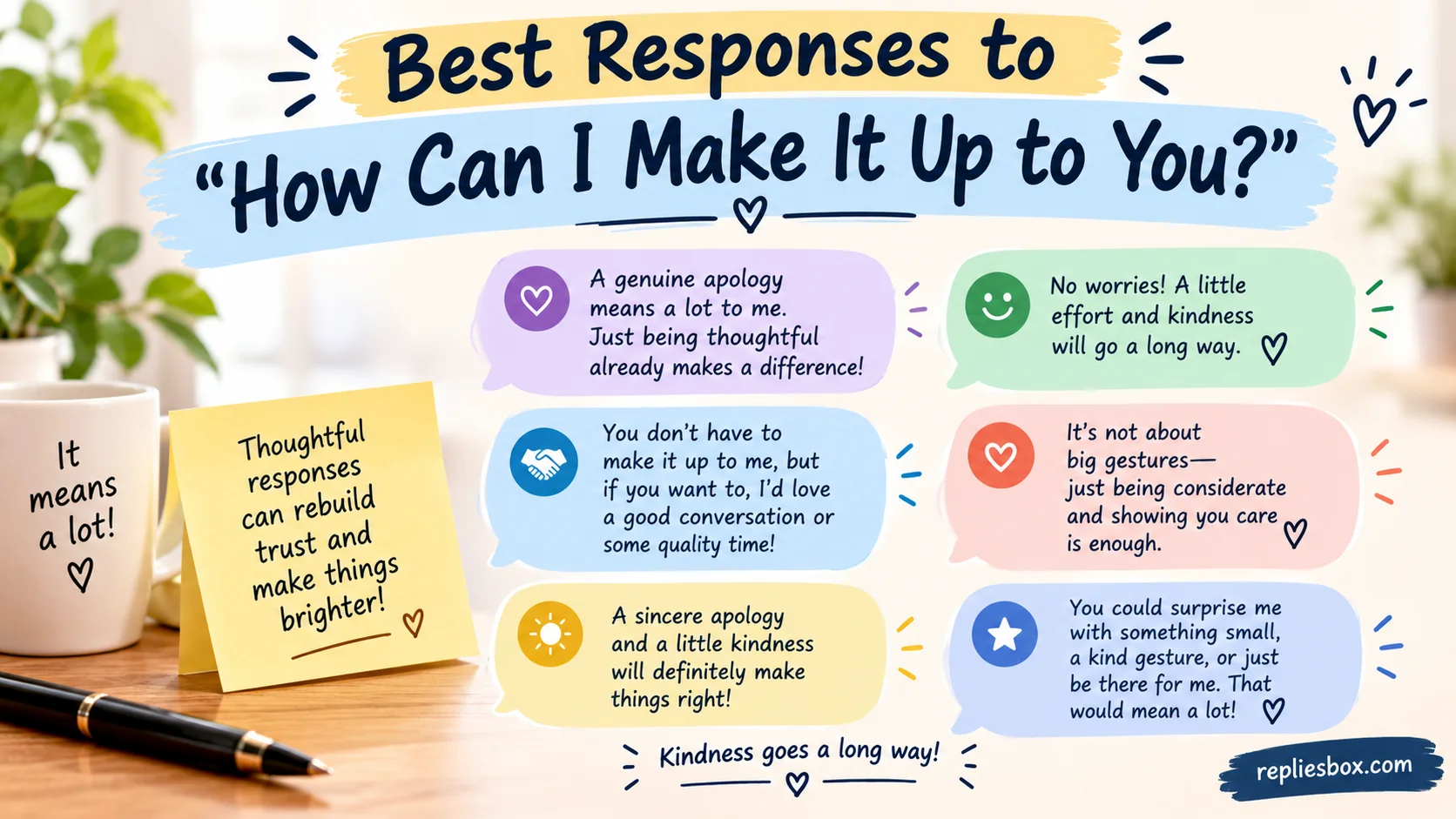
When someone asks, “How can I make it up to you?”, they are usually giving you a chance to say what you actually need. Maybe they hurt your feelings, forgot something important, canceled plans, or simply want to make things right. Your answer can be serious, lighthearted, forgiving, or even a little playful depending on what happened.
The best responses to “How can I make it up to you?” are honest without making the situation more complicated than it needs to be. If you are genuinely upset, you might want an apology or some changed behavior. If the issue is minor, a simple “You’re already forgiven” may be enough. With someone close to you, you can also use humor or a sweet response to ease the tension.
Below, you’ll find polite, heartfelt, funny, short, flirty, confident, and boundary-setting replies for different situations. Choose the one that sounds like you and fits the relationship, rather than sending a response that feels forced.
Read More: Funny Responses to “Okie Dokie” That Keep the Conversation Playful
Honest Responses When You Want Them to Understand What Went Wrong
If something genuinely bothered you, this is a good time to be straightforward. You do not have to pretend everything is fine just because the other person offered to make things right. A calm answer can tell them what would actually help without turning the conversation into another argument.
Meaning
This type of response communicates that you appreciate their willingness to fix things, but you also want them to understand the real issue.
Tone
Honest, calm, direct, and respectful.
Example
Them: How can I make it up to you?
You: Just understand why it hurt me and try not to do it again.
Best Use
Use this with a partner, friend, family member, or anyone who genuinely wants to repair the situation.
Simple and Polite Replies
Sometimes you do not need a long conversation. If the mistake was small and you appreciate the person’s effort, a simple response keeps things comfortable without making the situation bigger.
Meaning
You are accepting their apology or effort while showing that you are not holding a grudge.
Tone
Polite, friendly, and forgiving.
Example
Them: How can I make it up to you?
You: Honestly, you already have. I appreciate you asking.
Best Use
Good for everyday situations, casual conversations, friends, coworkers, or minor misunderstandings.
Short Text Responses
When someone sends this over text, a long explanation may feel unnecessary. A short reply can still communicate exactly what you mean.
Meaning
These responses get your point across without creating another lengthy conversation.
Tone
Casual, direct, and natural.
Example
Them: How can I make it up to you?
You: Just make it up to me with coffee. 😄
Best Use
Text messages, casual chats, and situations where the problem is not especially serious.
Heartfelt Responses for Someone You Care About
When the person matters to you, you may want to focus less on getting something from them and more on rebuilding the connection. A sincere response can make it clear that their effort means something to you.
Meaning
You are telling them that their willingness to make things right matters more than any particular favor.
Tone
Warm, sincere, and emotional without being overly dramatic.
Example
Them: How can I make it up to you?
You: Just show me that you understand, and let’s move forward together.
Best Use
Partners, close friends, family members, or meaningful relationships.
Forgiving Responses When You Are Ready to Move On
If you have already accepted their apology, there is no need to keep the mistake alive. A forgiving response can give both of you permission to move forward.
Meaning
You are letting them know that you have accepted their apology and do not expect them to keep making up for it.
Tone
Kind, mature, and reassuring.
Example
Them: How can I make it up to you?
You: You don’t have to. I forgive you. Let’s just move on from it.
Best Use
When the apology feels genuine and you are comfortable putting the situation behind you.
Funny Responses to “How Can I Make It Up to You?”
If the situation is minor and you are already joking around, humor can take the pressure out of the conversation. A playful answer works especially well when both people normally tease each other.
Meaning
You are accepting the situation without taking it too seriously.
Tone
Funny, playful, and relaxed.
Example
Them: How can I make it up to you?
You: Pizza sounds like a reasonable starting point.
Best Use
Close friends, siblings, partners, or anyone who understands your sense of humor.
Playful Replies That Keep the Conversation Light
Sometimes you want to acknowledge the apology while still teasing the other person a little. A playful response can make the exchange feel less serious without completely ignoring what happened.
Meaning
You are giving them a lighthearted way to make amends.
Tone
Playful, teasing, and friendly.
Example
Them: How can I make it up to you?
You: I accept snacks, compliments, and sincere apologies.
Best Use
Friends, dating conversations, and casual relationships where playful teasing is normal.
Flirty Responses for Someone You Like
If the person asking is someone you are dating or interested in, you can turn the moment into a little flirtation. Keep it natural rather than making the response overly romantic.
Meaning
You are accepting their offer while adding a hint of attraction or playful chemistry.
Tone
Flirty, confident, and light.
Example
Them: How can I make it up to you?
You: You could take me out and let me decide if you’re forgiven.
Best Use
Dating, flirting, or conversations with someone you already have some romantic chemistry with.
Cute Responses for Your Partner
With a partner, a small mistake does not always require a serious discussion. If you have already talked about it and want to reconnect, a sweet response can help bring the mood back to normal.
Meaning
You are showing that you care more about reconnecting than getting even.
Tone
Sweet, affectionate, and playful.
Example
Them: How can I make it up to you?
You: Come here, give me a hug, and we’ll start there.
Best Use
Romantic relationships and affectionate conversations.
Confident Responses When You Expect Changed Behavior
An apology means more when it is followed by different behavior. If someone has made the same mistake before, you may want to make that clear without being aggressive.
Meaning
You are saying that actions matter more to you than promises.
Tone
Confident, mature, and firm.
Example
Them: How can I make it up to you?
You: Just show me through your actions that you understand.
Best Use
When the same issue has happened more than once or when trust needs to be rebuilt.
Respectful Boundary-Setting Responses
You are not required to accept a favor or gesture just because someone asks how they can make things right. Sometimes what you need is space.
Meaning
This response communicates that you need time rather than a gift, favor, or immediate solution.
Tone
Calm, respectful, and firm.
Example
Them: How can I make it up to you?
You: Right now, I just need a little time to process everything.
Best Use
After a serious disagreement, emotional conversation, or situation where you are not ready to move on
Responses When an Apology Is Enough
If the person has already apologized sincerely, you may not want them to do anything else. Letting them know that can prevent unnecessary guilt.
Meaning
You are telling them that you value the apology itself and do not expect compensation.
Tone
Understanding, reassuring, and kind.
Example
Them: How can I make it up to you?
You: You apologized sincerely. That means enough to me.
Best Use
When the mistake was unintentional and you believe the apology was genuine.
Responses When You Want Quality Time
Sometimes the best way to repair a small disagreement is simply to spend time together. This can be more meaningful than asking for a material gift.
Meaning
You want their attention and presence rather than something expensive or elaborate.
Tone
Warm, personal, and sincere.
Example
Them: How can I make it up to you?
You: Just spend some time with me. I’d rather have that than anything else.
Best Use
Partners, close friends, family members, or someone you have been missing.
Responses When You Want Them to Take You Out
If you are comfortable keeping things casual, you can turn the apology into an invitation to do something together.
Meaning
You are giving them a simple and enjoyable way to make amends.
Tone
Casual, playful, and friendly.
Example
Them: How can I make it up to you?
You: Take me somewhere nice and we’ll call it even.
Best Use
Friends, partners, dating situations, or minor disagreements.
Clever Responses That Make Them Smile
A clever response can acknowledge the situation without sounding overly serious. These work best when the problem is relatively small.
Meaning
You are using wit to keep the conversation comfortable while still responding to their offer.
Tone
Clever, humorous, and confident.
Example
Them: How can I make it up to you?
You: I’m open to reasonable offers.
Best Use
Casual texting, friends, flirting, and light disagreements.
Sarcastic Responses for Close Friends
Sarcasm can be funny, but only when the relationship can handle it. Someone who is already feeling guilty may not appreciate a sharp response, so keep the joke gentle.
Meaning
You are exaggerating the situation for humor rather than expressing genuine anger.
Tone
Sarcastic, teasing, and playful.
Example
Them: How can I make it up to you?
You: I suppose you could start by admitting I was right.
Best Use
Close friends or people who regularly joke sarcastically with you.
Watch the tone: Sarcasm can sound much harsher over text because the other person cannot hear your voice.
Responses When You Do Not Want Anything
There are times when you genuinely do not need anything from the person. You simply want them to know that you appreciate the thought.
Meaning
You are accepting their concern without asking them to compensate for the mistake.
Tone
Easygoing, forgiving, and relaxed.
Example
Them: How can I make it up to you?
You: You don’t need to do anything. Just knowing you care is enough.
Best Use
Minor mistakes, close relationships, and situations where the person is already making an effort.
Responses When You Want Them to Make the First Move
If you are hurt but still open to fixing things, you can leave the door open while allowing the other person to take responsibility.
Meaning
You are giving them room to decide how they want to repair the situation.
Tone
Calm, slightly reserved, and confident.
Example
Them: How can I make it up to you?
You: You know what happened. I’ll let you decide how you want to make it right.
Best Use
When you want to see genuine effort rather than tell someone exactly what to do.
Responses When You Need a Genuine Conversation
Sometimes the issue cannot be fixed with dinner, flowers, jokes, or a quick apology. If something deeper is bothering you, say so.
Meaning
You are making it clear that understanding the issue matters more than receiving a gesture.
Tone
Serious, honest, and constructive.
Example
Them: How can I make it up to you?
You: I think we should talk about what happened before we decide how to move forward.
Best Use
Relationships, recurring disagreements, or situations involving hurt feelings and misunderstandings.
Responses When Someone Is Trying to Make Amends
If the other person is clearly making an effort, acknowledging that effort can encourage a healthier conversation.
Meaning
You recognize that they are trying and are willing to meet them halfway.
Tone
Appreciative, mature, and open.
Example
Them: How can I make it up to you?
You: I appreciate you asking. Let’s figure out what we can do differently from here.
Best Use
When you want to repair the relationship rather than simply accept an apology.
Responses When You Want to Keep Things Casual
Not every mistake needs an emotional conversation. If it was something small, you can answer casually and move on.
Meaning
You are showing that the situation is not serious enough to worry about.
Tone
Relaxed, casual, and friendly.
Example
Them: How can I make it up to you?
You: Just don’t do it again and we’re good.
Best Use
Friends, coworkers, casual acquaintances, and everyday misunderstandings.
Sweet Responses That Show You Appreciate the Effort
Sometimes the nicest answer is simply recognizing that the person cared enough to ask.
Meaning
You are focusing on their willingness to repair the situation rather than the mistake itself.
Tone
Warm, appreciative, and sincere.
Example
Them: How can I make it up to you?
You: Honestly, I appreciate you even asking. That means a lot.
Best Use
Close relationships, thoughtful conversations, and situations where you want to soften the tension.
How to Choose the Right Response
The best reply depends less on the exact words and more on what you actually want from the situation. Before answering, consider whether you want an apology, changed behavior, some time together, space, or simply to move on.
If the issue is small, a light or funny answer can keep things comfortable. If your feelings were genuinely hurt, a direct response is usually clearer than pretending everything is fine. When the same problem keeps happening, focus on what needs to change rather than asking for a temporary gesture.
Also think about your relationship with the person. A sarcastic joke that makes your best friend laugh might sound disrespectful to a coworker or someone you barely know. When you are unsure, choose a simple and respectful response rather than trying too hard to be clever.
Quick tip: If you want the relationship to improve, tell the person what would actually make you feel better instead of expecting them to guess.
Frequently Asked Questions
What is the best way to respond to “How can I make it up to you?”
The best response depends on what happened and what you need. If you are ready to forgive, you can say, “You already apologized, and I appreciate it.” If you want changed behavior, say, “Just show me that you understand and try not to repeat it.”
What can I say if I want them to apologize?
Keep it simple and direct: “A sincere apology would mean a lot to me.” This tells them what you need without making the conversation unnecessarily complicated.
What is a funny response to “How can I make it up to you?”
For a minor mistake, you could say, “I accept pizza as a formal apology.” Humor works best when the situation is light and the other person understands your sense of humor.
What should I say if I am still upset?
You do not have to pretend that you are ready to move on. Try saying, “I appreciate you asking, but I need some time before I’m ready to talk about it.”
Can I give a flirty response to “How can I make it up to you?”
Yes, if the conversation is already romantic or playful. For example: “Take me out and maybe I’ll consider forgiving you.” Keep the flirtation appropriate to the relationship.
Should I tell them exactly how to make it up to me?
If you know what would genuinely help, there is nothing wrong with saying it. Clear communication is usually better than making someone guess, especially when the issue involves hurt feelings or trust.
Conclusion
When someone asks, “How can I make it up to you?”, they usually know they have hurt, disappointed, or let you down in some way. Your response depends on what happened and how you feel about it. You might want a sincere apology, some effort, a little time together, or simply an acknowledgment that they understand why you were upset.
The best responses to “How can I make it up to you?” are honest and fit the relationship. If it was a small mistake, you can keep things light with a funny or casual reply. If the situation was more serious, a direct answer can help the other person understand what you actually need instead of leaving them guessing.
From short and polite replies to funny, heartfelt, flirty, and confident responses, these ideas give you natural ways to answer without sounding forced. Choose the one that matches your feelings, the person you are talking to, and what you want to happen next.