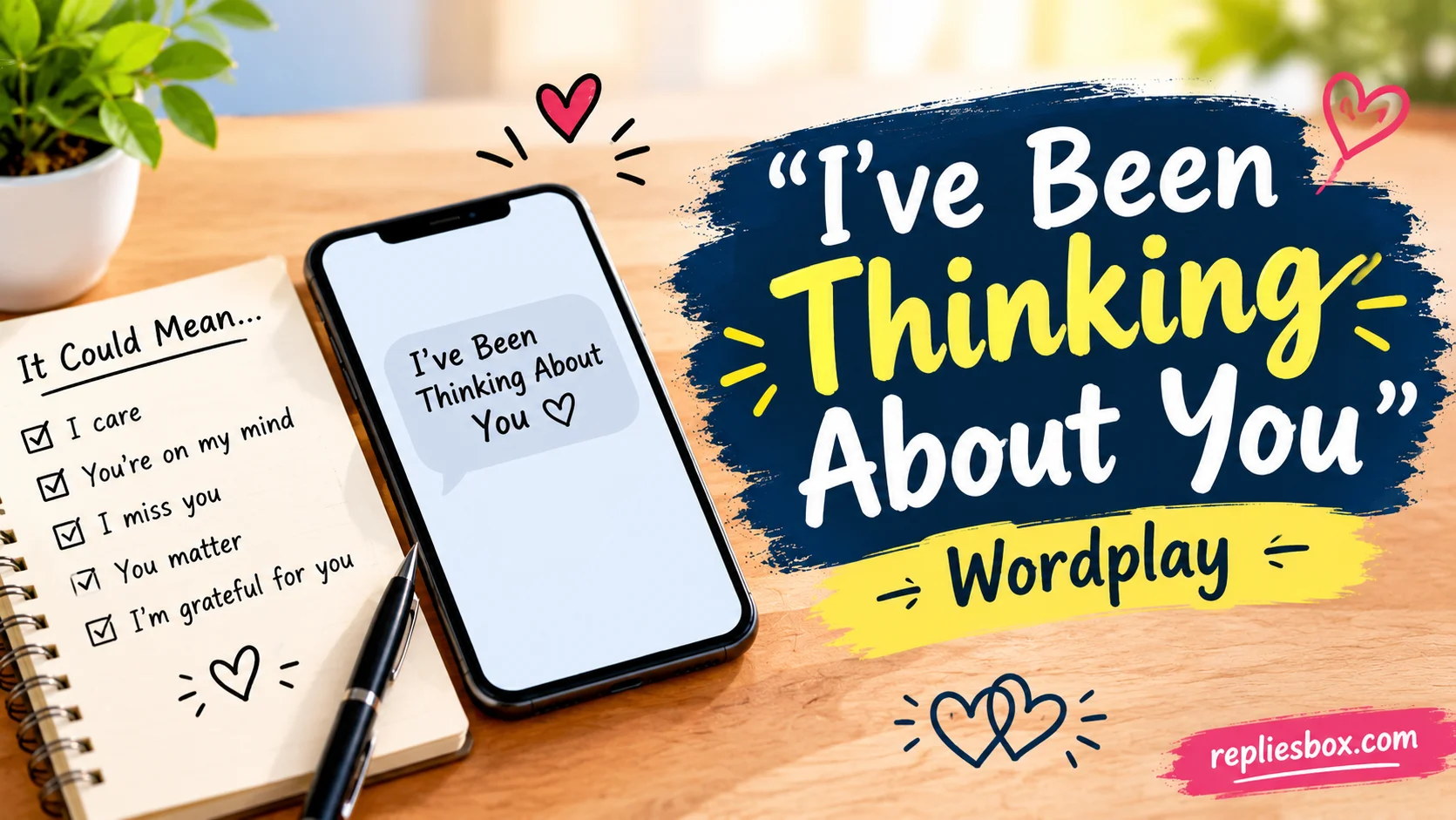
“I’ve been thinking about you” can mean very different things depending on who says it and how they say it. It might be a sweet message from a friend, a romantic hint from someone you like, or a simple way of reconnecting after some time apart. Your reply can keep things warm, playful, flirty, or casual without making the conversation feel forced.
The best responses to “I’ve been thinking about you” depend on your relationship with the person and what you want to communicate back. If you feel the same, you can be affectionate or romantic. If you want to keep things light, a funny or casual response works better. And if you are unsure about their intentions, a friendly reply gives you room to see where the conversation goes.
Below are natural replies for different situations, from sweet and flirty messages to funny, short, confident, and thoughtful answers. Pick the one that fits the moment—and more importantly, sounds like something you would actually say.
Read More: 25 Natural Synonyms for “In Time of Need” to Express Support and Care
Sweet Responses to “I’ve Been Thinking About You”
A sweet reply works well when you appreciate the message and want to show genuine warmth without making things overly romantic. This is especially useful when you already have a comfortable relationship with the person but want your response to feel a little more meaningful than a simple “thanks.” Keep it sincere rather than overly dramatic.
Meaning
This response shows that their message made you happy and that you appreciate being on their mind.
Tone
Warm, affectionate, genuine.
Example
Them: I’ve been thinking about you.
You: That’s really sweet. I’ve been thinking about you too.
Best Use
Good for texting a close friend, romantic interest, partner, or someone you care about.
“I’ve Been Thinking About You Too”
Sometimes the simplest response is the strongest one. If you genuinely feel the same way, there is no need to hide it behind a joke or complicated wording. This reply directly returns the feeling and naturally gives the other person an opening to continue the conversation.
Meaning
You are letting them know their thoughts about you are mutual.
Tone
Direct, warm, affectionate.
Example
Them: I’ve been thinking about you all day.
You: Honestly, I’ve been thinking about you too.
Best Use
Best for dating, relationships, or someone you already have mutual feelings for.
Flirty Responses to “I’ve Been Thinking About You”
If there is already some chemistry between you, a flirty reply can turn a simple message into a more playful conversation. The key is to match the level of flirtation already present. A light tease is usually safer than jumping straight into something overly intense.
Meaning
This lets you acknowledge their interest while adding a little romantic tension.
Tone
Flirty, playful, confident.
Example
Them: I’ve been thinking about you.
You: Should I be flattered, or should I be worried?
Best Use
Great for dating, flirting, or texting someone you know is interested in you.
“Should I Be Blushing Right Now?”
This is a playful way to show that their message affected you without directly saying how you feel. It keeps the conversation light while giving them room to flirt back.
Meaning
You are pleasantly surprised and slightly embarrassed in a fun way.
Tone
Cute, playful, flirty.
Example
Them: I’ve been thinking about you.
You: Should I be blushing right now?
Them: Maybe a little.
Best Use
Useful when you want to encourage flirting without becoming too serious.
Funny Responses to “I’ve Been Thinking About You”
Humor is useful when you want to avoid making the conversation too serious. A funny response can acknowledge the message while keeping the mood relaxed. This works particularly well with people who already understand your sense of humor.
Meaning
You are receiving their message positively but responding with a joke instead of a serious emotional statement.
Tone
Funny, casual, teasing.
Example
Them: I’ve been thinking about you.
You: Wow, I hope your brain is doing okay.
Best Use
Best with friends, close acquaintances, or someone you already joke around with.
“Well, That Explains the Random Smile”
This reply is sweet without being overly serious. It suggests that you might have been thinking about them too, but leaves enough mystery to keep the conversation interesting.
Meaning
You are playfully hinting that they have also been on your mind.
Tone
Cute, subtle, flirty.
Example
Them: I’ve been thinking about you.
You: Well, that explains the random smile I’ve had today.
Best Use
Good for texting someone you like when you want to flirt without being too obvious.
Cute Responses to “I’ve Been Thinking About You”
A cute answer can make the exchange feel personal without turning it into a serious romantic conversation. These responses are especially useful when you want to show affection while keeping the mood easygoing.
Meaning
You are happy that the person thought of you and want them to know it.
Tone
Cute, warm, affectionate.
Example
Them: I’ve been thinking about you.
You: Aww, now you’ve got me smiling at my phone.
Best Use
Ideal for texting a romantic interest, partner, or close friend.
Short Responses to “I’ve Been Thinking About You”
Sometimes you want to acknowledge the message without starting a long conversation. A short response can still sound warm if you choose the wording carefully. These are especially helpful when you are busy or texting casually.
Meaning
You are responding positively without adding unnecessary detail.
Tone
Simple, friendly, casual.
Example
Them: I’ve been thinking about you.
You: That’s sweet of you. ❤️
Best Use
Perfect for quick texts, casual conversations, or when you do not have time for a longer exchange.
“That’s Nice to Hear”
Not every situation calls for a romantic or emotional response. If you appreciate the message but are unsure what the other person means, this neutral answer keeps the interaction pleasant without giving a stronger signal than you intend.
Meaning
You acknowledge their thoughtfulness while keeping your own feelings open-ended.
Tone
Polite, neutral, friendly.
Example
Them: I’ve been thinking about you lately.
You: That’s nice to hear. How have you been?
Best Use
Useful when reconnecting with an old friend, acquaintance, or someone whose intentions you are unsure about.
Romantic Responses to “I’ve Been Thinking About You”
When the message comes from someone you love or are seriously dating, you can be more emotionally open. A romantic response should feel personal rather than like a generic compliment copied from somewhere else.
Meaning
You are returning their affection and making the emotional connection clear.
Tone
Romantic, sincere, affectionate.
Example
Them: I’ve been thinking about you all day.
You: I wish you were here. I’ve missed having you around.
Best Use
Best for partners or someone with whom you already share a romantic relationship.
“You’ve Been on My Mind Too”
This is a natural alternative to saying “I’ve been thinking about you too.” It feels personal while still being simple enough for everyday texting.
Meaning
You are directly telling them that your thoughts have also been with them.
Tone
Warm, romantic, sincere.
Example
Them: I’ve been thinking about you lately.
You: Funny you say that. You’ve been on my mind too.
Best Use
Works well in romantic conversations and early dating.
Playful Responses to “I’ve Been Thinking About You”
A playful answer is useful when you want to acknowledge the message but do not want to make the conversation overly emotional. Teasing can create a natural back-and-forth, especially when you already have an easy relationship.
Meaning
You are accepting the attention while turning it into a lighthearted exchange.
Tone
Playful, teasing, confident.
Example
Them: I’ve been thinking about you.
You: Hopefully only good thoughts.
Best Use
Good for friends, dating, or casual flirting.
“What Have You Been Thinking About?”
If you are curious about why they sent the message, ask them directly. This response is particularly useful when “I’ve been thinking about you” could have either romantic or friendly meaning.
Meaning
You are inviting them to explain their message instead of guessing what they mean.
Tone
Curious, open, slightly flirty.
Example
Them: I’ve been thinking about you.
You: Oh? What have you been thinking about?
Best Use
Excellent for dating, reconnecting, or situations where you want to encourage a deeper conversation.
Quick tip: Their answer may tell you more about their intentions than the original message did.
Confident Responses to “I’ve Been Thinking About You”
A confident reply accepts the compliment without sounding overly surprised or desperate for attention. This approach works well when you want to keep the interaction balanced.
Meaning
You recognize their interest and respond comfortably without overreacting.
Tone
Confident, relaxed, playful.
Example
Them: I’ve been thinking about you.
You: I had a feeling I was on your mind.
Best Use
Good for flirting, dating, and playful conversations.
“I Was Wondering When You’d Say That”
This response adds a little confidence and mystery. It suggests that their message did not completely surprise you, which can make the exchange more playful.
Meaning
You are teasing them while subtly suggesting that you may have noticed their interest.
Tone
Confident, teasing, flirty.
Example
Them: I’ve been thinking about you.
You: I was wondering when you’d finally admit it.
Best Use
Best when there is already obvious chemistry between you.
When You Want to Make Them Smile
Sometimes the best response is one that lets the other person know their message made your day. It does not need to be deeply romantic; a simple acknowledgment of the effect their words had can feel surprisingly personal.
Meaning
You are telling them that hearing from them made you happy.
Tone
Warm, appreciative, genuine.
Example
Them: I’ve been thinking about you.
You: Well, that just made my day a little better.
Best Use
Useful for partners, close friends, and people you genuinely enjoy hearing from.
When You Miss Them Too
If you have been apart from someone, their message may be an opening to talk about missing each other. This type of response works best when the feeling is genuine and you want to move the conversation toward reconnecting.
Meaning
You are openly returning the feeling of missing someone.
Tone
Affectionate, honest, emotional.
Example
Them: I’ve been thinking about you.
You: I’ve been missing you too. We should catch up soon.
Best Use
Great for long-distance relationships, old friends, family, or someone you have not seen recently.
When You Want to Ask Them to Meet
If you like the person and want to turn the conversation into an actual plan, use their message as an opportunity to suggest seeing each other. This is more meaningful than keeping the exchange entirely in text.
Meaning
You are showing interest and suggesting that you would rather spend time together than simply talk about it.
Tone
Warm, direct, confident.
Example
Them: I’ve been thinking about you.
You: Then maybe we should stop thinking and actually grab coffee.
Best Use
Perfect for dating or reconnecting with someone you enjoy spending time with.
When You Want a Subtle Flirty Reply
Not everyone wants to respond with an obvious romantic confession. A subtle flirt can show interest while leaving some room for the other person to make the next move.
Meaning
You are hinting that you enjoy their attention without completely revealing your feelings.
Tone
Subtle, playful, flirty.
Example
Them: I’ve been thinking about you.
You: Good. I’d hate to be forgotten that easily.
Best Use
Best for early dating or situations where you are still figuring out the chemistry.
When You Want to Keep It Friendly
If you care about the person but only see them as a friend, your response should be warm without accidentally sounding romantic. A friendly answer can acknowledge their message and redirect the conversation toward everyday life.
Meaning
You appreciate the sentiment but keep the relationship clearly friendly.
Tone
Friendly, relaxed, sincere.
Example
Them: I’ve been thinking about you.
You: That’s sweet! I hope everything’s been going well with you.
Best Use
Useful for friends, former classmates, coworkers you know socially, or acquaintances.
When You Are Not Sure How You Feel
Sometimes you receive a message like this before you know exactly what you want from the relationship. You do not have to immediately match the person’s emotional energy. A calm, open response lets you continue the conversation without making a promise.
Meaning
You acknowledge their message while giving yourself time to understand the situation.
Tone
Neutral, polite, open.
Example
Them: I’ve been thinking about you.
You: That’s kind of you to say. What made you think of me?
Best Use
Good when you are uncertain about their intentions or your own feelings.
When You Want to Turn It Into a Deeper Conversation
“I’ve been thinking about you” can sometimes signal that someone wants to talk about something important. Instead of immediately responding with a joke, you can invite them to explain what is on their mind.
Meaning
You are showing that you are willing to listen and understand what prompted their message.
Tone
Thoughtful, caring, open.
Example
Them: I’ve been thinking about you lately.
You: Is everything okay? Tell me what’s on your mind.
Best Use
Appropriate when the message feels unusually serious or comes from someone you care about.
Sarcastic or Teasing Responses
Sarcasm can work when the relationship already includes playful teasing. Over text, however, sarcasm can sometimes be misunderstood, so make sure the other person knows you are joking.
Meaning
You are teasing them rather than giving a straightforward emotional answer.
Tone
Sarcastic, playful, cheeky.
Example
Them: I’ve been thinking about you.
You: Finally. Took you long enough.
Best Use
Best with close friends or someone with whom you already have a teasing dynamic.
Watch the tone: Avoid this response if the person is being vulnerable or if you are not sure they will understand the joke.
Responses When You Want to Keep Them Guessing
A little mystery can make a conversation more interesting, especially during early flirting. Rather than immediately saying how you feel, give them a response that encourages them to keep talking.
Meaning
You are acknowledging their interest while leaving your own feelings slightly unclear.
Tone
Mysterious, playful, flirty.
Example
Them: I’ve been thinking about you.
You: Interesting. I wonder why.
Best Use
Good for flirting and early-stage dating.
Responses When You Want to Be Affectionate but Not Overly Romantic
There are situations where you care about someone deeply but do not want your message to sound like a romantic confession. A warm response can communicate appreciation without creating confusion.
Meaning
You value the connection and are happy they reached out.
Tone
Affectionate, gentle, friendly.
Example
Them: I’ve been thinking about you.
You: That means a lot. I’m really glad you reached out.
Best Use
Works well with close friends, family members, or people you share a meaningful connection with.
When You Want to Give Them a Compliment Back
Returning a little kindness can keep the conversation balanced. Instead of only acknowledging their message, you can tell them something positive about them too.
Meaning
You are accepting their affection and giving some warmth back.
Tone
Sweet, appreciative, personal.
Example
Them: I’ve been thinking about you.
You: That’s sweet. You have a way of making people feel remembered too.
Best Use
Useful in close friendships, dating, or heartfelt conversations.
When You Want a Very Casual Text Reply
If the conversation is relaxed, you do not need to turn a simple message into a deep emotional exchange. A casual response keeps things moving without sounding rehearsed.
Meaning
You are acknowledging the message naturally and keeping the conversation easy.
Tone
Casual, friendly, relaxed.
Example
Them: I’ve been thinking about you.
You: Haha, what brought me to mind?
Best Use
Great for casual texting and conversations with friends or someone you are getting to know.
When You Want to Be Direct About Your Feelings
If you already know where you stand, being straightforward can be more effective than hiding behind humor. A direct answer can be especially meaningful when the other person has taken a small emotional risk by sending the original message.
Meaning
You are clearly communicating that their feelings are welcome and possibly mutual.
Tone
Honest, confident, sincere.
Example
Them: I’ve been thinking about you a lot.
You: I’m glad you told me. I feel the same way about you.
Best Use
Best for romantic relationships or situations where mutual feelings are already clear.
30. Quick One-Line Responses to “I’ve Been Thinking About You”
When you need something short, these options cover different moods without requiring a long conversation:
- “I’ve been thinking about you too.”
- “That’s really sweet.”
- “Now you’ve got me smiling.”
- “What made you think of me?”
- “Good. I like being on your mind.”
- “I was wondering when you’d say that.”
- “You’ve been on my mind too.”
- “That’s nice to hear.”
- “Aww, I miss you too.”
- “Should I be flattered?”
- “Well, now I’m curious.”
- “You just made my day.”
- “Hopefully they were good thoughts.”
- “Funny, I was thinking about you too.”
- “Maybe we should see each other soon.”
- “That makes two of us.”
- “Now I’m wondering why.”
- “You’re pretty hard to forget.”
- “I’m glad you reached out.”
- “Tell me more.”
These are best treated as starting points rather than lines you have to copy word for word. The strongest reply is usually the one that matches your actual feelings and the relationship you have with the person.
Frequently Asked Questions
What is the best response to “I’ve been thinking about you”?
There is no single best response. If you feel the same way, “I’ve been thinking about you too” is honest and natural. If you are unsure, ask, “What made you think of me?”
How do I respond to “I’ve been thinking about you” from someone I like?
You can be warm or lightly flirty. Try, “Funny you say that—you’ve been on my mind too,” or “Then maybe we should stop thinking and see each other.”
What is a funny response to “I’ve been thinking about you”?
A playful line such as “Wow, I hope your brain is doing okay” can work with someone who understands your humor. Avoid sarcasm if the conversation feels serious or emotional.
How do I respond if I don’t feel the same way?
Keep your answer polite and neutral. “That’s kind of you to say” acknowledges their message without suggesting feelings you do not have.
Should I respond with a flirty message?
Only if flirting fits the relationship and you are comfortable encouraging that direction. A flirty response can create expectations, so keep it subtle if you are still unsure about the person’s intentions.
What if I want to know why they were thinking about me?
Ask directly: “What made you think of me?” It is simple, natural, and gives the other person a chance to explain without forcing you to guess.
Conclusion
The right response to “I’ve been thinking about you” depends less on finding a clever line and more on understanding the feeling behind the message. You can return the affection, make a joke, flirt a little, ask what prompted the thought, or keep things friendly if that feels more appropriate.
Before replying, consider who sent the message, what your relationship is like, and what you actually want to communicate. A short, honest response will usually feel more natural than an overly polished one. When in doubt, match their energy without saying more than you genuinely mean.














3 thoughts on “30 Best Responses to “I’ve Been Thinking About You” to Match Every Mood”