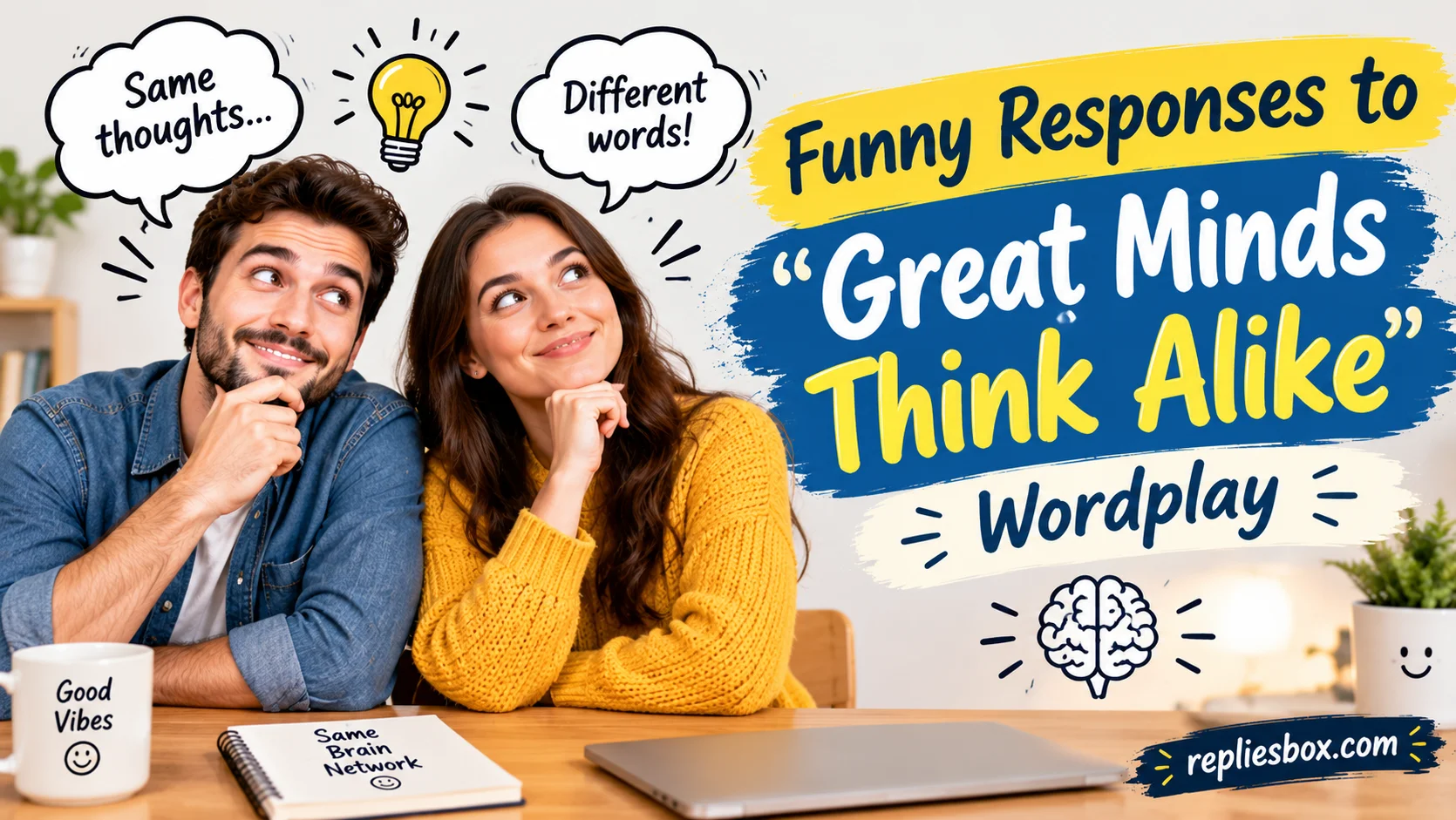
When someone says “Great minds think alike,” they are usually pointing out that you both had the same idea, made the same choice, or said something at exactly the right moment. It is an easy phrase to turn into a joke, especially when you want to keep the conversation light rather than simply agreeing.
The best funny responses to “Great Minds Think Alike” add a little personality without making the exchange awkward. You can tease the other person, make fun of your shared idea, or confidently pretend that your matching thoughts prove you are both geniuses. The right reply depends on whether you are talking to a friend, coworker, family member, or someone you are flirting with.
Below are playful, sarcastic, clever, and short replies you can use in texts or everyday conversations. Some are harmless and friendly, while others have a little more attitude, so choose one that fits the relationship and the moment.
Read More: 30 Best Responses to “I’ve Been Thinking About You” to Match Every Mood
Playful Responses That Go Along With the Joke
Sometimes the easiest way to respond is to accept the “great minds” compliment and exaggerate it. These replies keep the joke moving without trying too hard. They work especially well when both of you already have a playful sense of humor.
Meaning
You are agreeing with the joke while playfully treating the shared idea as evidence of your brilliance.
Tone
Playful, confident, lighthearted.
Example
Friend: We both ordered pizza. Great minds think alike.
You: Finally, someone who understands my genius.
Best Use
Friends, siblings, casual texting, and relaxed conversations.
“And We Didn’t Even Need a Meeting”
This works nicely when you both reach the same decision without discussing it beforehand. It gives an ordinary coincidence a mock-professional twist.
Meaning
You are joking that you coordinated perfectly without actually coordinating.
Tone
Funny, clever, casual.
Example
Coworker: We both picked the same design. Great minds think alike.
You: And we didn’t even need a meeting. We’re improving.
Best Use
Coworkers, group projects, friends, and casual workplace conversations.
“Finally, Some Proof I’m a Genius”
If you want a confident and slightly ridiculous comeback, lean into the compliment. The humor comes from taking a very ordinary coincidence much more seriously than necessary.
Meaning
You are jokingly treating the shared idea as proof of your intelligence.
Tone
Confident, funny, self-amused.
Example
Friend: We both had the same idea.
You: Finally, some proof I’m a genius.
Best Use
Friends and people who understand your sense of humor.
“Or We Just Have the Same Bad Ideas”
Not every matching idea is a sign of genius. This reply flips the original phrase around and works particularly well when the shared decision is questionable.
Meaning
You are joking that agreeing with each other does not necessarily mean the idea was actually smart.
Tone
Self-deprecating, sarcastic, playful.
Example
Friend: We both thought this was a good idea. Great minds think alike.
You: Or we just have the same bad ideas.
Best Use
Close friends and situations where making fun of yourselves fits the mood.
“I Knew You Had Good Taste”
This turns the phrase into a light compliment. It is particularly useful when you want to sound playful rather than sarcastic.
Meaning
You are jokingly suggesting that their agreement proves they have excellent judgment.
Tone
Playful, complimentary, confident.
Example
Them: We chose the same restaurant. Great minds think alike.
You: I knew you had good taste.
Best Use
Friends, casual conversations, and light flirting.
“Great? I Was Going for Legendary.”
If you want something a little more exaggerated, raise the compliment instead of simply accepting it. The ridiculous confidence makes the line funny.
Meaning
You are playfully pretending that “great” is not impressive enough for your level of genius.
Tone
Bold, humorous, exaggerated.
Example
Friend: Great minds think alike.
You: Great? I was going for legendary.
Best Use
Casual conversations with friends or people who enjoy dramatic jokes.
“We’re Basically Sharing One Brain”
This is an easy response when you keep having the same ideas. It turns the coincidence into a silly image without needing a complicated punchline.
Meaning
You are joking that your thoughts are so similar that you must be sharing a brain.
Tone
Funny, casual, silly.
Example
Sibling: I was just about to say that.
You: We’re basically sharing one brain at this point.
Best Use
Family, close friends, and casual texting.
“Careful, People Might Start Expecting Greatness”
This response adds a little mock confidence to the conversation. It works best when the shared idea is something ordinary and you want to exaggerate its importance.
Meaning
You are joking that this moment of brilliance could create unrealistic expectations.
Tone
Witty, confident, playful.
Example
Friend: We both brought snacks. Great minds think alike.
You: Careful, people might start expecting greatness from us.
Best Use
Friends, group chats, and casual conversations.
“I Was About to Say the Same Thing About You”
This is a nice way to turn the phrase back toward the other person. It can sound especially charming when there is already some playful chemistry.
Meaning
You are returning the compliment while keeping the exchange light.
Tone
Playful, charming, slightly flirty.
Example
Them: Great minds think alike.
You: Funny, I was about to say the same thing about you.
Best Use
Friends, dating, and playful conversations.
“At Least One of Us Is Thinking”
This is a more sarcastic option that works when you have a close relationship and the teasing is clearly mutual.
Meaning
You are pretending that the shared thought is not necessarily proof of intelligence.
Tone
Sarcastic, teasing, cheeky.
Example
Friend: Great minds think alike.
You: Good. At least one of us is thinking.
Best Use
Close friends who are comfortable with sarcastic humor.
Watch the tone: This can sound insulting with someone you do not know well.
“Look at Us, Making Smart Decisions”
Sometimes the humor comes from pretending that a completely normal choice deserves an award. This response works well when you want something funny without being sarcastic toward the other person.
Meaning
You are exaggerating the importance of your shared decision.
Tone
Light, humorous, friendly.
Example
Friend: We both picked the same movie.
You: Look at us, making smart decisions.
Best Use
Friends, siblings, and casual group conversations.
“That’s What I Was Thinking, But Better”
This is a playful way to give the other person credit while keeping the conversation humorous.
Meaning
You are joking that they somehow expressed your thought better than you could.
Tone
Friendly, clever, complimentary.
Example
Coworker: Great minds think alike.
You: Exactly. That’s what I was thinking, but better.
Best Use
Coworkers, friends, and light conversations.
“We Should Probably Stop Before We Become Too Powerful”
If you both keep agreeing, turn the coincidence into an exaggerated threat. This response is intentionally dramatic and works best when the conversation is already silly.
Meaning
You are joking that your combined intelligence could become dangerous.
Tone
Playful, dramatic, ridiculous.
Example
Friend: We both had the same idea again.
You: We should probably stop before we become too powerful.
Best Use
Friends, group chats, and humorous texting.
“I’ll Take That as a Compliment”
This is a simple response when you want to acknowledge the phrase without adding too much. It sounds confident and leaves room for the other person to continue joking.
Meaning
You are accepting their statement as praise.
Tone
Confident, casual, friendly.
Example
Them: Great minds think alike.
You: I’ll take that as a compliment.
Best Use
Everyday conversation, texting, and casual interactions.
“See? You’re Learning From Me”
Turn the coincidence into a playful claim that the other person is following your lead. It is intentionally boastful but works when the relationship allows teasing.
Meaning
You are joking that your idea influenced theirs.
Tone
Teasing, confident, funny.
Example
Friend: We both ordered the same thing.
You: See? You’re learning from me.
Best Use
Close friends and playful conversations.
“I Knew We Were Onto Something”
This works when both of you make the same unusual choice or come up with the same idea. It makes the coincidence sound like a shared discovery.
Meaning
You are pretending that your agreement confirms the idea was obviously good.
Tone
Witty, upbeat, playful.
Example
Friend: You wanted to try that place too?
You: I knew we were onto something.
Best Use
Friends, dates, casual plans, and text conversations.
“That’s Either Genius or Slightly Concerning”
Use this when the shared idea is unusual, questionable, or unexpectedly bold. It gives you room to laugh at yourselves without rejecting the idea entirely.
Meaning
You are joking that agreeing with each other may be impressive—or a warning sign.
Tone
Clever, sarcastic, playful.
Example
Friend: We both thought buying matching costumes was a good idea.
You: That’s either genius or slightly concerning.
Best Use
Friends, group chats, and silly situations.
“Two Brains, One Questionable Decision”
This is a good choice when you both agree on something that probably is not the smartest decision. The humor comes from acknowledging that intelligence and good judgment are not always the same thing.
Meaning
You are admitting that the agreement may not actually prove you made a good choice.
Tone
Funny, self-aware, sarcastic.
Example
Friend: We both said yes to this road trip.
You: Two brains, one questionable decision.
Best Use
Close friends and humorous conversations.
“I Was Going to Say That, But You Beat Me to It”
Sometimes the funniest response does not need a punchline. This one sounds natural and reinforces the coincidence without making the conversation feel scripted.
Meaning
You are confirming that you genuinely had the same thought.
Tone
Natural, friendly, casual.
Example
Them: Great minds think alike.
You: I was going to say that, but you beat me to it.
Best Use
Friends, coworkers, texting, and everyday conversations.
“Well, This Is Getting Suspicious”
When you and another person repeatedly agree, you can jokingly act as though something strange is happening. It is especially effective after several coincidences in a row.
Meaning
You are playfully pointing out how often your thoughts seem to match.
Tone
Funny, curious, playful.
Example
Friend: We picked the same movie again.
You: Well, this is getting suspicious.
Best Use
Friends, siblings, dating, and casual texting.
“We Clearly Share Excellent Taste”
This reply shifts the focus from intelligence to taste. It is a good option when you both choose the same food, music, movie, outfit, or destination.
Meaning
You are joking that your agreement proves you both have good judgment.
Tone
Friendly, confident, complimentary.
Example
Them: You like that band too?
You: Apparently, we clearly share excellent taste.
Best Use
Friends, dating, social conversations, and texting.
“Don’t Get Used to Me Being This Right”
This response adds mock arrogance to the exchange. It works because you are pretending that agreeing with the other person is evidence of your superior judgment.
Meaning
You are jokingly presenting yourself as unusually correct.
Tone
Confident, teasing, humorous.
Example
Friend: We both knew that would happen.
You: Don’t get used to me being this right.
Best Use
Close friends and playful conversations.
“Our Brains Deserve a Coffee Break”
This is a softer, silly response that avoids making fun of either person. It is a good choice when you want something quirky rather than sarcastic.
Meaning
You are jokingly celebrating the successful collaboration between your minds.
Tone
Silly, friendly, lighthearted.
Example
Coworker: Great minds think alike.
You: Our brains deserve a coffee break after that.
Best Use
Coworkers, friends, and casual workplace conversations.
“We Should Put This Talent to Good Use”
This turns a small coincidence into a playful suggestion that you should accomplish something together. It can naturally lead into making plans.
Meaning
You are joking that your matching ideas could be useful if you worked together.
Tone
Positive, playful, confident.
Example
Friend: We both thought of the same plan.
You: We should put this talent to good use.
Best Use
Friends, coworkers, group projects, and planning conversations.
“Now I’m Slightly Worried About How Similar We Are”
This is a playful choice when the agreement feels almost too coincidental. It works especially well with someone you have known for a while.
Meaning
You are amused by how closely your thoughts seem to match.
Tone
Funny, teasing, slightly dramatic.
Example
Friend: We literally said the same thing at the same time.
You: Now I’m slightly worried about how similar we are.
Best Use
Close friends, siblings, and people you frequently have coincidences with.
“Great Minds, Questionable Execution”
Not every shared idea turns out perfectly. This response is ideal when you both had a good idea but somehow managed to make a mess of it.
Meaning
You are admitting that having the same idea does not guarantee doing it well.
Tone
Self-deprecating, witty, sarcastic.
Example
Friend: At least we had the same plan.
You: Great minds, questionable execution.
Best Use
Friends, coworkers, and situations where you can laugh about a mistake.
“At This Point, We Should Start Charging for Our Ideas”
This exaggerates your shared creativity into a ridiculous business opportunity. It is a fun choice when you both keep coming up with ideas together.
Meaning
You are joking that your combined brainpower is valuable enough to sell.
Tone
Funny, confident, exaggerated.
Example
Friend: We came up with another good idea.
You: At this point, we should start charging for our ideas.
Best Use
Friends, group chats, brainstorming sessions, and casual conversations.
“I’d Agree With You, but That Would Prove Your Point”
This is a clever way to avoid simply saying “exactly.” It keeps the joke going while acknowledging that you both had the same thought.
Meaning
You are playfully pretending that agreeing would make their argument too convincing.
Tone
Clever, witty, sarcastic.
Example
Them: Great minds think alike.
You: I’d agree with you, but that would prove your point.
Best Use
Friends, witty conversations, and people who enjoy wordplay.
“We’re Clearly Operating on the Same Frequency”
This response is less sarcastic and more charming. It works when you want to point out that you and the other person seem naturally in sync.
Meaning
You are saying that you understand each other and tend to think similarly.
Tone
Warm, playful, slightly flirty.
Example
Them: We both picked the same song.
You: We’re clearly operating on the same frequency.
Best Use
Friends, dating, and relaxed conversations.
“Okay, This Is Starting to Feel Like a Superpower”
Use this when the coincidences keep piling up. It turns repeated agreement into a playful imaginary ability.
Meaning
You are joking that your ability to think alike is becoming unusually powerful.
Tone
Funny, enthusiastic, playful.
Example
Friend: Same movie, same food, same idea.
You: Okay, this is starting to feel like a superpower.
Best Use
Friends, group chats, and casual texting.
“I Guess We’re Both Brilliant Today”
This is an easy, positive response when you want to agree without sounding too boastful. The word “today” makes the confidence feel intentionally playful.
Meaning
You are celebrating the shared idea while jokingly limiting the brilliance to this particular moment.
Tone
Lighthearted, confident, funny.
Example
Friend: Great minds think alike.
You: I guess we’re both brilliant today.
Best Use
Friends, siblings, coworkers, and casual conversations.
“That’s One Way to Say We Have Good Taste”
This response works especially well when the shared opinion is about food, movies, music, fashion, or another preference.
Meaning
You are reframing their phrase as evidence that you both have similar and good taste.
Tone
Clever, friendly, confident.
Example
Them: You picked the same restaurant?
You: That’s one way to say we have good taste.
Best Use
Dating, friends, social conversations, and casual texting.
Frequently Asked Questions
What is a funny response to “Great minds think alike”?
Try something playful such as “Finally, some proof I’m a genius” or “Or we just have the same bad ideas.” The best choice depends on whether you want to sound confident, silly, or sarcastic.
What can I say when a friend says “Great minds think alike”?
With a friend, you have more room to tease. Try “We’re basically sharing one brain” or “At least one of us is thinking.” Use the sarcastic option only if that kind of humor is normal between you.
What is a clever comeback to “Great minds think alike”?
“I’d agree with you, but that would prove your point” is a clever choice because it acknowledges the phrase while turning the agreement into another joke.
Can I use these responses at work?
Yes, but stick with lighter options such as “And we didn’t even need a meeting” or “Our brains deserve a coffee break.” Avoid sharp sarcasm with coworkers unless you already know the tone is welcome.
What is a flirty response to “Great minds think alike”?
Try “I was about to say the same thing about you” or “We’re clearly operating on the same frequency.” These suggest chemistry without making the conversation overly serious.
Should a funny response be sarcastic?
Not necessarily. A funny reply can be silly, exaggerated, playful, or self-deprecating. Sarcasm works best with people who already understand your humor and may not be the right choice in a professional or unfamiliar setting.
Conclusion
The best funny responses to “Great Minds Think Alike” are the ones that add something to the moment instead of simply repeating the original joke. You can exaggerate your genius, tease the other person, joke about having questionable ideas, or turn the coincidence into a playful compliment.
Think about the person you are talking to before choosing your comeback. A silly response is usually safe with friends, while a clever or lightly complimentary reply can work better with someone you like. If the joke feels natural coming from you, it will usually sound much better than a line that feels forced.