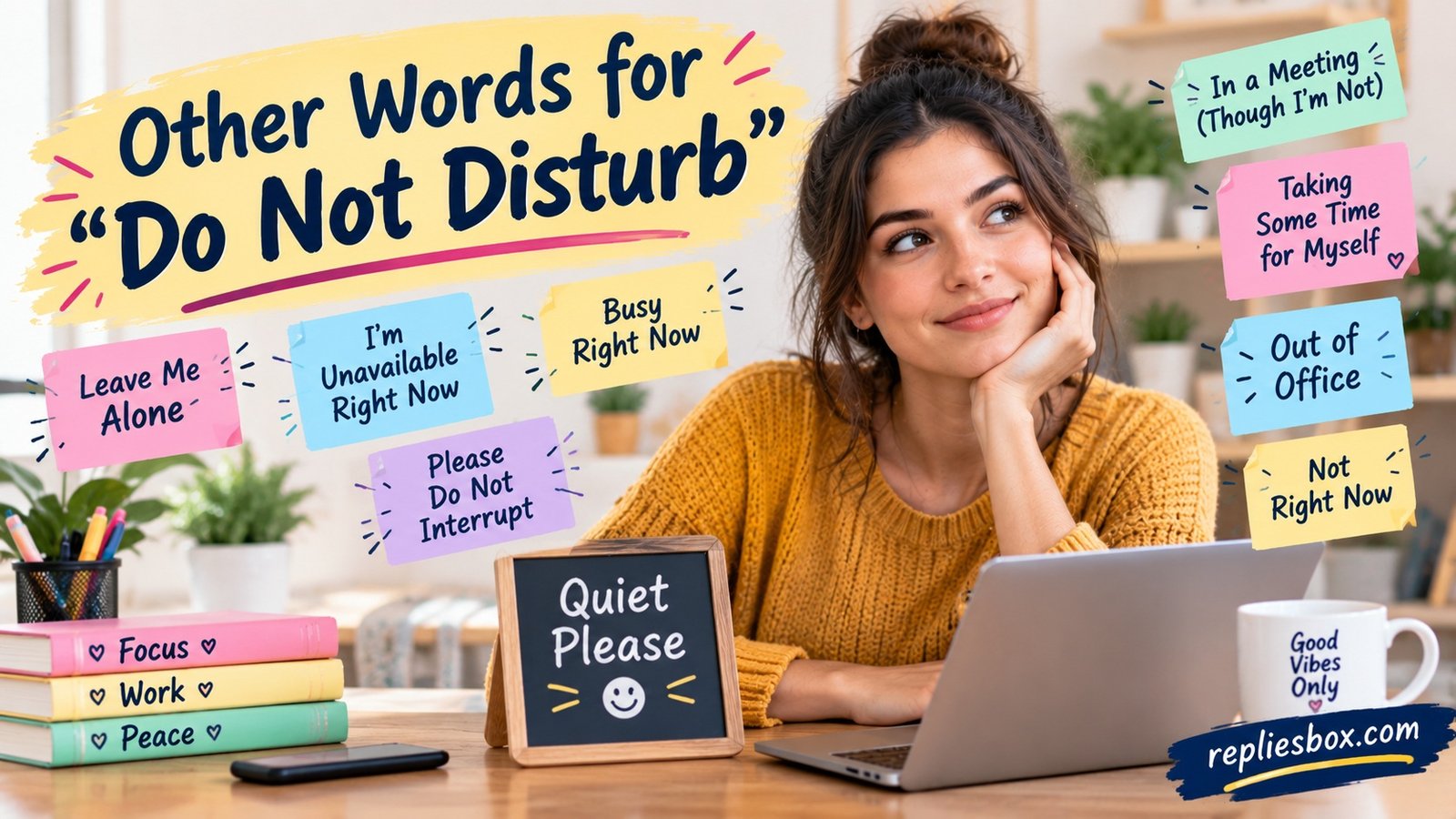
Sometimes, you need a little peace and quiet, whether you’re working, studying, resting, or simply taking a break from your phone. That’s when the phrase “Do Not Disturb” comes in handy. However, using the same words every time can sound a little blunt, especially when you want to express your need for privacy politely.
Fortunately, there are plenty of other words for “Do Not Disturb” that fit different situations. You can choose a friendly phrase like “I need a little quiet time,” a professional option like “Please allow me some uninterrupted time,” or a short message like “Unavailable for now.”
The right phrase depends on who you’re speaking to and how you want to sound. Whether you’re setting a boundary with friends, writing a work message, or updating your phone status, these alternatives can help you communicate clearly without sounding rude.
Read More: 25 Other Ways to Say “Don’t Threaten Me With a Good Time” That Sound Funny and Flirty
1. Please Do Not Interrupt
“Please do not interrupt” is a direct but polite way to ask others to let you finish what you are doing. It works especially well when you are studying, working on an important task, or participating in a meeting. Adding “please” makes the request more courteous without weakening the boundary.
Meaning
A request to avoid interrupting you while you are busy.
Tone
Polite, clear, and firm.
Example
Coworker: Can I ask you something?
You: I’m finishing an important task. Please do not interrupt me for a few minutes.
Best Use
Use it at work, while studying, or when you need uninterrupted concentration.
2. I’m Unavailable Right Now
This phrase communicates that you cannot respond or give someone your attention at the moment. It sounds professional and does not require you to explain why you are busy. You can also use it as a messaging status when you want others to know you may reply later.
Meaning
You are temporarily unable to talk or respond.
Tone
Professional, neutral, and respectful.
Example
Colleague: Are you free to discuss the project?
You: I’m unavailable right now, but I’ll get back to you this afternoon.
Best Use
Use it for work messages, email statuses, business calls, and professional conversations.
3. Please Give Me Some Space
When you need privacy or emotional breathing room, “Please give me some space” can express your needs without being unnecessarily harsh. It is more personal than a typical office sign, so it works best when speaking to someone who understands your relationship and circumstances.
Meaning
You need some personal space and would prefer not to be approached for a while.
Tone
Honest, personal, and firm.
Example
Friend: You seem quiet. What’s wrong?
You: I’m just dealing with a few things. Please give me some space, and I’ll talk when I’m ready.
Best Use
Use it with friends, family members, or someone who is giving you more attention than you want.
4. Quiet Time, Please
If you want a gentle way to discourage interruptions, “Quiet time, please” is short and easy to understand. It focuses on your need for calm rather than making the other person feel unwelcome. It is particularly useful in shared homes, libraries, study rooms, and other quiet spaces.
Meaning
You would like a peaceful environment without unnecessary noise or interruptions.
Tone
Gentle, friendly, and simple.
Example
Sibling: Can we play music in here?
You: Quiet time, please. I’m trying to finish my reading.
Best Use
Use it at home, in study areas, or wherever a calm environment is needed.
5. Focus Mode: Please Wait
“Focus mode” is a modern, convenient alternative to “Do Not Disturb,” especially for digital statuses. It tells people that you are concentrating on something and may not respond immediately. Adding “please wait” makes the message more helpful because it signals that the delay is temporary.
Meaning
You are concentrating and will respond when you are available.
Tone
Modern, practical, and courteous.
Example
Friend’s message: Are you coming online?
Your status: Focus mode: Please wait. I’ll reply when I’m free.
Best Use
Use it for phone statuses, work chat applications, study sessions, and productivity settings.
6. Please Respect My Privacy
This phrase is useful when the issue is not simply being busy but having personal information, conversations, or activities left undisturbed. It establishes a clear boundary and asks others to respect it. Because it is firm, it is best reserved for situations where privacy genuinely matters.
Meaning
You are asking others not to intrude into your personal matters.
Tone
Serious, respectful, and assertive.
Example
Acquaintance: Why don’t you let me read your messages?
You: Please respect my privacy. My messages are personal.
Best Use
Use it when setting boundaries around personal conversations, belongings, devices, or private matters.
7. I Need Some Time Alone
When you want to be by yourself, this phrase explains your needs without suggesting that you are angry with anyone. It is a natural way to ask for solitude, particularly when you need to rest, think, or recharge after a busy day.
Meaning
You want to spend some time alone without company or conversation.
Tone
Gentle, honest, and personal.
Example
Partner: Would you like to watch a movie together?
You: Maybe later. I need some time alone to unwind first.
Best Use
Use it with partners, friends, and family when you need personal time.
8. Please Let Me Concentrate
This alternative works well when you are trying to complete something that requires your full attention. It explains the reason for your request without sounding overly formal. If you are working against a deadline or preparing for an exam, it helps others understand why interruptions are unwelcome.
Meaning
You are asking others to allow you to focus on your current task.
Tone
Direct, polite, and practical.
Example
Classmate: Want to chat for a bit?
You: Not right now, please let me concentrate. I need to finish this assignment.
Best Use
Use it during work, studying, reading, or any task that requires concentration.
9. Taking a Break From Messages
Sometimes, you want to step away from notifications without cutting yourself off from people permanently. This phrase makes that intention clear. It is a useful alternative for social media profiles, messaging applications, and personal status updates when you need a temporary digital break.
Meaning
You are temporarily reducing or avoiding messages and notifications.
Tone
Casual, transparent, and friendly.
Example
Friend: Why haven’t you replied to my messages?
You: I’m taking a break from messages today. I’ll catch up with everyone later.
Best Use
Use it for WhatsApp statuses, social media profiles, or messages to friends and relatives.
10. Please Hold All Questions Until Later
In a busy workplace or group setting, interruptions can make it difficult to finish a task. This phrase gives people a clear alternative: save their questions for a more suitable time. It is especially useful when you are presenting, handling a deadline, or completing a task that requires uninterrupted attention.
Meaning
You want people to postpone their questions until you are available.
Tone
Organized, professional, and firm.
Example
Team member: I have a few questions about the report.
You: Please hold all questions until later. I’ll be available after I finish this section.
Best Use
Use it during meetings, presentations, training sessions, and focused work periods.
11. Please Knock Before Entering
If you need a “Do Not Disturb” alternative for a bedroom, office, or private room, this phrase sets a practical boundary. It does not necessarily mean nobody can enter; it means people should respect your privacy by announcing themselves first.
Meaning
People should knock and wait before entering your space.
Tone
Polite, clear, and considerate.
Example
Roommate: Can I come into your room whenever I need something?
You: Please knock before entering, especially when my door is closed.
Best Use
Use it on bedroom doors, office doors, study rooms, or shared living spaces.
12. In a Meeting — Please Wait
This phrase is particularly effective for office doors and digital statuses. It lets colleagues know that you are occupied without suggesting that you do not want to speak to them at all. It is short enough for a sign and clear enough for a workplace messaging status.
Meaning
You are attending a meeting and cannot be interrupted at that moment.
Tone
Professional, neutral, and courteous.
Example
Colleague: Can I stop by your desk?
You: I’m in a meeting right now. Please wait until I’m finished.
Best Use
Use it on office doors, calendars, team chat statuses, and meeting-room signs.
13. Please Allow Me to Finish
When someone repeatedly interrupts you, this phrase helps you reclaim the conversation without being rude. It is more appropriate for discussions and meetings than for a general privacy sign. The wording makes it clear that you are not refusing to communicate; you simply want to complete your thought first.
Meaning
You want to finish speaking or completing a task before someone intervenes.
Tone
Assertive, composed, and respectful.
Example
Colleague: I think you’re missing the point—
You: Please allow me to finish, and then I’d be happy to hear your thoughts.
Best Use
Use it during meetings, discussions, interviews, and conversations where you are being interrupted.
14. Do Not Call — Text Only, Please
If you prefer written communication while you are busy, this phrase offers a clear alternative to a general “Do Not Disturb” status. It tells people how to reach you without inviting an unexpected phone call. You can add an estimated response time if you want to make expectations clearer.
Meaning
You are unavailable for calls but may be able to read or answer text messages.
Tone
Direct, practical, and polite.
Example
Friend: Can I call you now?
You: I can’t talk on the phone right now. Do not call—text only, please.
Best Use
Use it in messaging statuses, personal profiles, or situations where calls are inconvenient.
15. Resting — Please Let Me Be
When you are tired or trying to recover after a long day, “Resting—please let me be” is a simple way to ask for peace. It communicates your need without suggesting that you are upset with the people around you. If you want a softer version, you can say, “I’m resting right now; let’s talk later.”
Meaning
You are resting and do not want to be disturbed.
Tone
Calm, personal, and straightforward.
Example
Family member: Are you coming downstairs?
You: I’m resting right now. Please let me be for a little while.
Best Use
Use it at home, while recovering from a tiring day, or when you need quiet time to rest.
16. Please Contact Me Later
Sometimes, you are willing to speak but simply cannot do so at the moment. “Please contact me later” communicates that distinction clearly. It is a useful choice when you do not want someone to assume you are ignoring them, but you also cannot stop what you are doing to respond immediately.
Meaning
You are asking the person to reach out again at a more convenient time.
Tone
Polite, practical, and professional.
Example
Client: Do you have a moment to discuss the details?
You: I’m tied up at the moment. Please contact me later this afternoon.
Best Use
Use it for work calls, business messages, appointments, and non-urgent conversations.
17. Private Time — Please Respect It
This phrase makes your need for personal time explicit. It is slightly more formal than “I need some time alone” and works well when you want a short notice that others can understand without a lengthy explanation.
Meaning
You are reserving a period for yourself and asking others not to intrude.
Tone
Firm, respectful, and composed.
Example
Housemate: Can I invite friends over while you’re working in your room?
You: I need some private time this afternoon. Please respect it.
Best Use
Use it for personal spaces, shared homes, and situations where you need a clear boundary.
18. Heads Down — Working on Something Important
“Heads down” is an informal expression that means concentrating seriously on a task. It is especially common in workplace conversations where people need uninterrupted time to get something done. The phrase feels less strict than “Do Not Disturb,” while still signaling that you are not readily available.
Meaning
You are focused on a task and prefer not to be interrupted.
Tone
Casual, focused, and work-friendly.
Example
Teammate: Want to grab coffee?
You: I’m heads down on a deadline for the next hour. Can we go afterward?
Best Use
Use it in team chats, office conversations, and informal professional settings.
19. Please Keep the Noise Down
Not every interruption comes from a conversation. Sometimes, you simply need people nearby to reduce the noise so you can rest, work, or study. This phrase focuses on the behavior you want changed rather than telling everyone to avoid you altogether.
Meaning
You are asking others to reduce noise and maintain a quieter environment.
Tone
Polite, direct, and practical.
Example
Roommate: I’m going to play music while you study.
You: Could you please keep the noise down? I have an exam tomorrow.
Best Use
Use it in shared homes, libraries, study spaces, and offices.
20. Currently Offline
If you want a short status that tells people you are not available online, “Currently offline” is a simple alternative. It works particularly well when you want to disconnect from work chats, gaming platforms, or social media without explaining your plans.
Meaning
You are not available online or are not actively responding to messages.
Tone
Neutral, concise, and modern.
Example
Friend: Are you joining the group chat tonight?
You: I’m currently offline for the evening. I’ll catch up tomorrow.
Best Use
Use it for messaging profiles, gaming accounts, work chat statuses, and social media.
21. Please Give Me a Moment
When you only need a short period without interruption, this phrase is more welcoming than a strict “Do Not Disturb” notice. It tells the other person that you have noticed their request but need a little time before responding.
Meaning
You need a brief pause before you can give someone your attention.
Tone
Courteous, calm, and reassuring.
Example
Coworker: Can you check this email?
You: Please give me a moment to finish this paragraph, and I’ll take a look.
Best Use
Use it in face-to-face conversations, customer service, office settings, and everyday interactions.
22. Not Available for Visitors
For offices, home workspaces, or private appointments, this phrase makes it clear that visitors should not stop by unexpectedly. It is more formal than a casual request for quiet and is best used when you need a clear notice for people who may not know your schedule.
Meaning
You are not accepting visitors at the moment.
Tone
Formal, clear, and firm.
Example
Visitor: Can I stop by without making an appointment?
You: I’m not available for visitors today. Please arrange a suitable time first.
Best Use
Use it on office doors, appointment notices, and private workspaces.
23. Please Save It for Later
This is a casual way to ask someone to postpone a conversation or request. It can sound friendly when used with people you know, but it may seem dismissive if you say it abruptly. If the matter is important, acknowledge that before asking to discuss it later.
Meaning
You want to postpone a conversation or request until you have more time.
Tone
Casual, direct, and context-dependent.
Example
Friend: I need to tell you a long story right now.
You: Can you please save it for later? I need to finish this assignment first.
Best Use
Use it with friends, family, or colleagues when the issue is not urgent.
24. Deep in Concentration
This phrase explains that you are fully focused on a task. It works well as a short sign or status because it communicates why you may not respond immediately. It is less commanding than “Do Not Disturb” and can help others understand that you are working through something that requires attention.
Meaning
You are concentrating deeply and would prefer not to be interrupted.
Tone
Calm, focused, and professional.
Example
Colleague: I sent you a few messages. Did you see them?
You: I was deep in concentration while finishing the report. I’ll check them now.
Best Use
Use it on desk signs, work chat statuses, study spaces, and personal productivity messages.
25. I’ll Get Back to You When I’m Free
When you want to set a boundary without leaving someone uncertain, this phrase offers a helpful balance. It communicates that you cannot respond now but intend to reply when your schedule allows. If you know when you will be free, giving an approximate time makes the message even more useful.
Meaning
You are busy at the moment and will respond when you have time.
Tone
Friendly, considerate, and reassuring.
Example
Friend: Can we talk about our weekend plans?
You: I’m busy for the next hour, but I’ll get back to you when I’m free.
Best Use
Use it in text messages, workplace conversations, and everyday communication when you need to postpone a reply.
Frequently Asked Questions
What is another polite way to say “Do Not Disturb”?
“Please do not interrupt,” “I’m unavailable right now,” and “Please give me some quiet time” are polite alternatives. Choose one based on whether you need privacy, concentration, or a temporary break from conversation.
What is a professional alternative to “Do Not Disturb”?
“I’m currently unavailable,” “In a meeting—please wait,” and “Please contact me later” are suitable for workplaces. They communicate your availability clearly without sounding unnecessarily harsh.
What is a short phrase for a Do Not Disturb status?
You can use “Focus mode,” “Currently offline,” “Busy right now,” or “Quiet time, please.” These options work well for messaging apps, phone statuses, and social media profiles.
How can I ask someone not to disturb me without sounding rude?
Explain your need briefly and politely. For example, say, “I need some time to focus, but I’ll be available later.” This sets a boundary while reassuring the other person that you are not dismissing them.
What should I write on my office door instead of “Do Not Disturb”?
Try “Please do not interrupt,” “In a meeting—please wait,” or “Deep in concentration.” If you will be available at a specific time, include it so colleagues know when they can approach you.
Is “Do Not Disturb” rude?
No. “Do Not Disturb” is a common and understandable phrase, especially on phone settings, signs, and private spaces. However, a softer alternative may be more suitable in personal conversations or workplaces where you want to maintain a friendly tone.
Conclusion
There are many ways to say “Do Not Disturb” without sounding too strict or unfriendly. Phrases such as “I’m unavailable right now,” “Please give me some space,” and “Focus mode” suit different needs, from professional settings to personal time. Think about who will read your message and whether you want to sound polite, firm, or casual. If you need a simple option that works in most situations, try “I need some uninterrupted time right now.” It communicates your boundary clearly while leaving room for a conversation later.