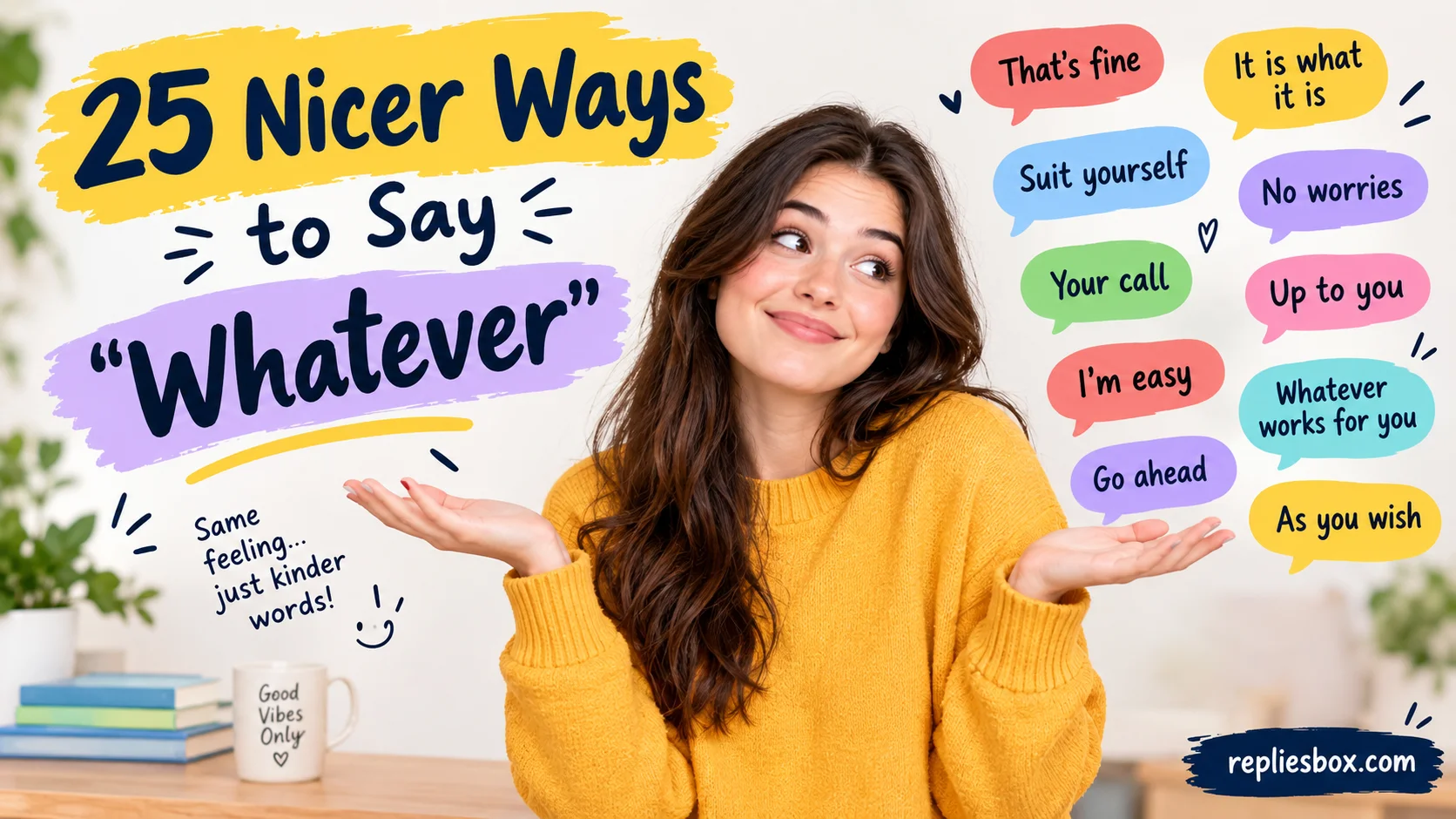
“Whatever” can be harmless, but in a text or conversation, it often sounds colder than you intend. Depending on the situation, it may come across as annoyed, dismissive, or like you have stopped caring about the discussion. If you want to keep things friendly, changing just a few words can make your response feel much more natural.
There are plenty of nicer ways to say “whatever” without losing the meaning behind it. If you genuinely do not mind, you can say, “I’m good either way” or “I don’t really mind.” If you want the other person to decide, “It’s up to you” works better. And if you are tired of an argument, a calm phrase like “Let’s leave it there” can end the conversation without sounding rude.
The right response really depends on the moment and the person you are talking to. A casual reply that works with a close friend may not sound right at work, while a playful answer may be better for texting than for a serious conversation. The examples below give you natural alternatives for different situations, so you can pick something that sounds like you, not a forced comeback.
Read More: 30 Funny Responses to “What’s Shakin, Bacon?”
I’m Fine With Whatever You Choose
This is a simple way to tell someone that you genuinely do not have a preference. It keeps the conversation cooperative instead of making it sound like you are annoyed with the decision.
Meaning
You are comfortable letting the other person make the choice.
Tone
Friendly, relaxed, and cooperative.
Example
Friend: Should we get pizza or burgers?
You: I’m fine with whatever you choose.
Best Use
Use this when making plans with friends, family, coworkers, or anyone whose choice you are happy to accept.
Either One Works for Me
When both options sound equally good, this is a natural replacement for “whatever.”
Meaning
You are happy with either choice.
Tone
Casual, polite, and easygoing.
Example
Friend: Do you want to meet Friday or Saturday?
You: Either one works for me.
Best Use
This works especially well when scheduling plans or choosing between two options.
I Don’t Really Mind
If you simply have no strong opinion, this phrase gets the point across without sounding dismissive.
Meaning
You are not particularly concerned about which option is chosen.
Tone
Calm, casual, and neutral.
Example
Sister: Do you want the window seat or the aisle?
You: I don’t really mind. You can pick.
Best Use
Use it when the decision genuinely is not important to you.
You Can Decide
Sometimes “whatever” really means, “I’m happy for you to choose.” Saying that directly makes your intention much clearer.
Meaning
You are giving the other person control over the decision.
Tone
Simple, relaxed, and cooperative.
Example
Friend: Where should we eat tonight?
You: You can decide. I’m good with anything.
Best Use
This is a good choice for casual plans with friends, partners, or family.
I’m Good Either Way
This sounds natural in everyday conversation and works particularly well when there are only a couple of choices.
Meaning
You are comfortable with either outcome.
Tone
Friendly, confident, and casual.
Example
Coworker: Should we have the meeting online or in person?
You: I’m good either way.
Best Use
Use it in casual conversations or relatively informal workplace discussions.
Whatever Works for You
If the other person has a preference, this response shows that you are willing to accommodate them.
Meaning
You are happy to go with whatever option is most convenient for them.
Tone
Considerate, flexible, and polite.
Example
Friend: I can pick you up at six or seven.
You: Whatever works for you is fine with me.
Best Use
This is useful when making plans or trying to make a conversation easier for someone else.
I’ll Leave It Up to You
Instead of sounding like you do not care, this phrase makes it clear that you are intentionally letting the other person decide.
Meaning
You are handing the decision over to them.
Tone
Relaxed, polite, and trusting.
Example
Partner: Which restaurant should we try tonight?
You: I’ll leave it up to you.
Best Use
It works well when the other person has a stronger preference or knows more about the available options.
I’m Open to Anything
This is a more positive alternative when you are genuinely willing to consider different ideas.
Meaning
You are open to different possibilities.
Tone
Positive, friendly, and flexible.
Example
Friend: What do you want to do this weekend?
You: I’m open to anything. What did you have in mind?
Best Use
Great for making plans, brainstorming, choosing activities, or discussing weekend plans.
I’m Happy With Either Option
This is slightly more polished than “whatever” and works well when you want to sound thoughtful.
Meaning
Both choices are acceptable to you.
Tone
Warm, polite, and neutral.
Example
Coworker: Would you prefer Tuesday or Wednesday?
You: I’m happy with either option.
Best Use
This fits scheduling, workplace conversations, and situations where you want to remain courteous.
No Strong Preference Here
When you genuinely have no particular choice, this direct alternative avoids any suggestion of irritation.
Meaning
You do not have a preferred option.
Tone
Neutral, direct, and composed.
Example
Teammate: Which design do you prefer?
You: No strong preference here. I can work with either.
Best Use
This is especially useful in professional or decision-making conversations.
I’m Easy
In casual conversation, “I’m easy” can mean that you are flexible about plans or choices. Because the phrase can have other meanings in some contexts, use it with people who understand your conversational style.
Meaning
You are easygoing about the decision.
Tone
Casual, relaxed, and informal.
Example
Friend: What time should we leave?
You: I’m easy. Whenever you’re ready works.
Best Use
Best for informal conversations with friends or people you know well.
I Don’t Have a Preference
When you want to be clear and straightforward, this is one of the cleanest alternatives.
Meaning
You genuinely do not prefer one option over another.
Tone
Neutral, polite, and direct.
Example
Coworker: Which version should we send?
You: I don’t have a preference. I’m fine with either one.
Best Use
Use this when clarity matters, especially at work or during group decisions.
I’m Fine With Either
This keeps your response short while still sounding cooperative.
Meaning
Both choices are acceptable to you.
Tone
Casual, friendly, and neutral.
Example
Friend: Coffee or tea?
You: I’m fine with either.
Best Use
Perfect for short conversations and text messages.
Go With What You Prefer
This response shifts the decision toward the other person without sounding like you are avoiding the conversation.
Meaning
You are encouraging them to choose the option they personally like.
Tone
Considerate, friendly, and flexible.
Example
Friend: Should we watch a comedy or a thriller?
You: Go with what you prefer. I’m happy either way.
Best Use
Use it when you truly do not mind and want the other person to enjoy their choice.
I’m Not Too Bothered Either Way
This works when the decision is relatively unimportant to you.
Meaning
You do not feel strongly about the outcome.
Tone
Casual, relaxed, and slightly informal.
Example
Friend: Do you want to take the earlier train?
You: I’m not too bothered either way.
Best Use
Use this with friends or in relaxed everyday conversations.
It’s Up to You
Sometimes the simplest response is the most natural.
Meaning
You are allowing the other person to make the decision.
Tone
Casual and neutral.
Example
Sibling: Should we order now or wait?
You: It’s up to you.
Best Use
This is best when you genuinely have no preference. If your tone is too flat, however, it can still sound dismissive, so adding “I’m fine either way” can make it warmer.
I’m Cool With Whatever You Decide
This keeps some of the casual feeling of “whatever” while making the message more friendly.
Meaning
You are comfortable with their decision.
Tone
Casual, friendly, and laid-back.
Example
Friend: I found two restaurants. Which one should we try?
You: I’m cool with whatever you decide.
Best Use
This works well in texts and informal conversations with friends.
Either Is Fine by Me
A short phrase like this can replace “whatever” without making the conversation feel overly formal.
Meaning
You are satisfied with either available choice.
Tone
Polite, calm, and straightforward.
Example
Coworker: Morning or afternoon for the call?
You: Either is fine by me.
Best Use
It works in both casual and professional situations.
I’m Flexible
When your schedule or preference is not fixed, “I’m flexible” sounds positive and helpful.
Meaning
You are willing to adjust to the other person’s needs or preferences.
Tone
Professional, cooperative, and accommodating.
Example
Client: Would Thursday afternoon work?
You: I’m flexible, so just let me know what time suits you.
Best Use
This is particularly useful for work, scheduling, appointments, and practical conversations.
Whatever You Think Is Best
If you trust the other person’s judgment, this phrase can sound much more respectful than simply saying “whatever.”
Meaning
You are comfortable letting them choose what they believe is the better option.
Tone
Respectful, trusting, and cooperative.
Example
Coworker: Should we send the shorter version or include the extra details?
You: Whatever you think is best. You’ve got a better sense of what they need.
Best Use
Use it when the other person has more experience or knowledge about the decision.
I’m Happy to Go Along With Your Choice
This is useful when you want to show cooperation rather than indifference.
Meaning
You are willing to support the other person’s decision.
Tone
Warm, cooperative, and considerate.
Example
Friend: I think the second plan makes more sense.
You: I’m happy to go along with your choice.
Best Use
This works when someone has already suggested an option and you want to show that you are comfortable supporting it.
I’d Rather Not Get Into It
Not every “whatever” means “I do not care.” Sometimes it means, “I do not want to continue this argument.” In that situation, this response is clearer and more respectful.
Meaning
You are choosing not to continue a difficult or unproductive discussion.
Tone
Direct, calm, and boundary-setting.
Example
Person: We’re still going to argue about this?
You: I’d rather not get into it. Let’s leave it there.
Best Use
Use this when a conversation is becoming unnecessarily heated and you want to step away without escalating it.
Let’s Just Leave It There
When “whatever” would normally be used to end an argument, this alternative communicates the same intention more clearly.
Meaning
You do not want to continue the disagreement.
Tone
Calm, firm, and respectful.
Example
Friend: We clearly disagree about this.
You: We do. Let’s just leave it there.
Best Use
This is useful when continuing the conversation is unlikely to accomplish anything.
I’m Not Going to Argue About It
Sometimes you need a firm response rather than a passive-sounding “whatever.”
Meaning
You are choosing not to continue an argument.
Tone
Direct, confident, and firm.
Example
Person: You have to admit you were wrong.
You: We see it differently, and I’m not going to argue about it.
Best Use
Use this when someone is pushing you into an argument and you want to establish a clear boundary.
Let’s Agree to Disagree
When two people simply have different opinions, this can be much healthier than ending the conversation with “whatever.”
Meaning
You recognize the disagreement without needing to convince the other person.
Tone
Mature, calm, and respectful.
Example
Friend: I still think that movie was terrible.
You: I actually liked it, but let’s agree to disagree.
Best Use
Use it when the disagreement is harmless and neither person needs to change the other’s mind.
How to Choose the Right Alternative to “Whatever”
The best replacement depends on what you actually mean.
A phrase such as “Let’s just leave it there” communicates your boundary more honestly.
And if you are texting, remember that even a polite phrase can sound cold when it is extremely short. Adding a few words can make a noticeable difference:
“Either one works for me 😊”
usually feels warmer than simply:
“Either.”
A quick rule to remember
Indifference → “I don’t really mind.”
Flexibility → “I’m good either way.”
Letting someone choose → “It’s up to you.”
Being accommodating → “Whatever works for you.”
Ending an argument → “Let’s leave it there.”
Professional flexibility → “I’m flexible.”
FAQs
What is a polite way to say “whatever”?
A polite alternative is “I don’t really mind”, “Either one works for me,” or “I’m happy with either option.” The best choice depends on whether you are expressing flexibility or simply avoiding a decision.
What can I say instead of “whatever” in a text?
For a casual text, try “I’m good either way,” “You can choose,” or “Whatever works for you.” These sound more cooperative while staying short and natural.
How can I say “whatever” without sounding rude?
Make your actual meaning clear. If you do not have a preference, say “I don’t have a preference.” If you want someone else to choose, say “It’s up to you.” Clear wording is usually less likely to sound dismissive.
What is a good professional alternative to “whatever”?
In a workplace setting, phrases such as “I’m flexible,” “Either option works for me,” or “I’m happy to go with your recommendation” usually sound more appropriate.
What can I say instead of “whatever” during an argument?
If you want to end the disagreement without escalating it, try “Let’s agree to disagree,” “I’d rather not argue about it,” or “Let’s just leave it there.” These make your intention clearer than an abrupt “whatever.”
Is “whatever works for you” rude?
Usually, no. It is generally polite when you genuinely mean that the other person’s preference is fine with you. However, a sarcastic tone can make almost any phrase sound dismissive, so context and delivery still matter.
Conclusion
“Whatever” is not always rude, but it can easily sound that way when the other person cannot hear your tone. A small change—such as “I’m good either way,” “It’s up to you,” or “Let’s leave it there”—can make your meaning much clearer. The key is to choose a phrase based on what you actually want to communicate: flexibility, indifference, cooperation, or a boundary. When in doubt, choose the response that sounds natural in your own voice while giving the other person enough context to understand what you mean.