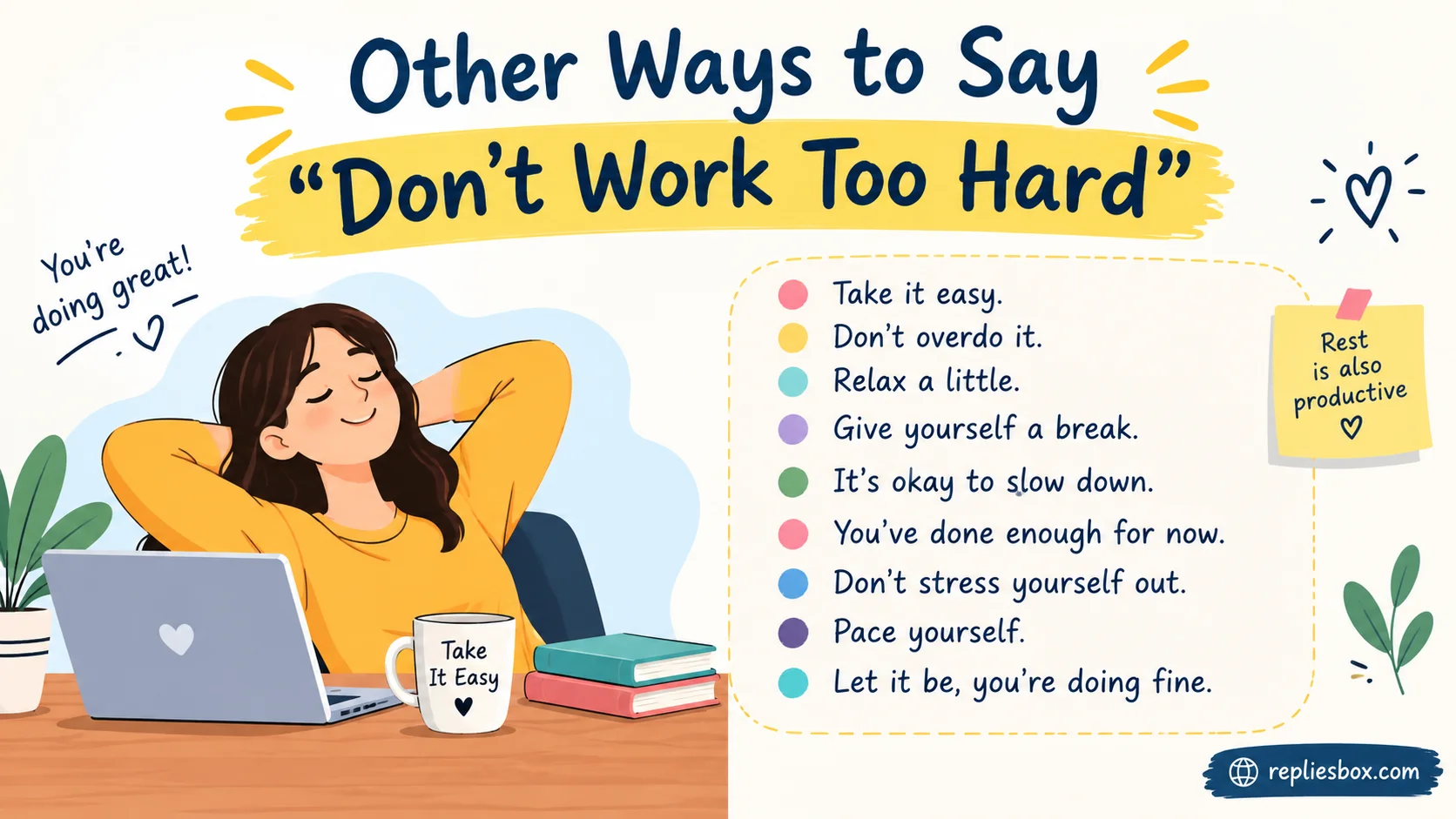
Saying “Don’t work too hard” is a simple way to show someone you care, but sometimes you want something that sounds warmer, more natural, or a little more personal. The right phrase can turn an ordinary goodbye into a thoughtful message, especially when someone has had a long or stressful day at work.
There are plenty of natural other ways to say “Don’t work too hard”, depending on who you’re talking to. You might want to sound friendly with a coworker, caring with a friend, playful over text, or simply encouraging when someone is taking on too much. A small change in wording can make your message feel much more genuine.
From “Take it easy” and “Pace yourself” to funny lines like “Don’t let work eat you alive,” these alternatives give you different ways to express the same thought without sounding repetitive. Choose one that fits the relationship, the situation, and the tone you normally use with that person.
Read More: Different Ways to Say “I Just Arrived”
Take It Easy at Work
“Take it easy at work” is a simple alternative when you want to encourage someone not to put unnecessary pressure on themselves. It sounds caring without being overly personal, making it suitable for coworkers, friends, or family members who have a busy day ahead.
Meaning
This response communicates that the person should pace themselves and avoid becoming overwhelmed.
Tone
Friendly, caring, casual.
Example
Coworker: I have a mountain of things to finish today.
You: Take it easy at work. You don’t have to conquer everything at once.
Best Use
Use it in casual conversations, workplace chats, or texts with someone you know reasonably well.
Don’t Overdo It
When someone has a tendency to keep working long after they should stop, “Don’t overdo it” is a natural choice. It shows concern without sounding like you’re giving them a lecture.
Meaning
It suggests that the person should know when to slow down and give themselves a break.
Tone
Caring, direct, conversational.
Example
Friend: I’m going to stay late again and finish everything tonight.
You: Don’t overdo it. Some of that can wait until tomorrow.
Best Use
Good for friends, family, and coworkers you have a comfortable relationship with.
Make Sure You Get a Break
This version focuses more on rest than workload. It works especially well when someone has been working continuously and needs a reminder to step away for a while.
Meaning
You’re encouraging the person to pause, recharge, and avoid working nonstop.
Tone
Thoughtful, supportive, warm.
Example
Coworker: I’ve been working since early this morning.
You: Make sure you get a break somewhere in there.
Best Use
Ideal for workplace conversations and messages to someone having a particularly busy day.
Don’t Forget to Breathe
“Don’t forget to breathe” adds a little personality to the usual reminder to relax. It can sound humorous when said casually, but it also carries a genuine message about slowing down.
Meaning
It means, in a lighthearted way, that the person should pause instead of becoming consumed by work.
Tone
Playful, caring, friendly.
Example
Friend: I’ve got five deadlines this week.
You: Don’t forget to breathe between all those deadlines.
Best Use
Best with friends, close coworkers, or people who appreciate playful encouragement.
Pace Yourself
“Pace yourself” is particularly useful when someone has a long day or demanding project ahead. Rather than telling them to stop working, you’re simply reminding them not to use all their energy at once.
Meaning
It encourages someone to manage their energy and workload steadily.
Tone
Practical, supportive, direct.
Example
Coworker: I’m going to try to finish this whole project today.
You: Pace yourself. It’s a big project.
Best Use
Works well at work, during long projects, or whenever someone is taking on too much at once.
Don’t Let Work Take Over Your Day
This is a warmer alternative when you want to remind someone that their entire day doesn’t have to revolve around work.
Meaning
You’re encouraging them to maintain some balance between work and personal time.
Tone
Caring, thoughtful, slightly serious.
Example
Friend: I might spend the whole evening answering emails.
You: Don’t let work take over your whole day. Give yourself some time too.
Best Use
Best for friends, family, or coworkers who frequently work beyond their normal hours.
Leave Some Energy for Yourself
This phrase shifts the focus from productivity to personal well-being. It sounds considerate without telling someone exactly what they should or shouldn’t do.
Meaning
It reminds someone that their own time and energy matter too.
Tone
Warm, thoughtful, supportive.
Example
Friend: I’m planning to work late again tonight.
You: Leave some energy for yourself, too.
Best Use
Useful with close friends, family members, or anyone who has been pushing themselves too much.
Don’t Burn Yourself Out
When someone is consistently taking on too much, this direct phrase may fit better than a casual “Don’t work too hard.”
Meaning
It encourages the person to avoid exhausting themselves physically or mentally through excessive work.
Tone
Concerned, direct, supportive.
Example
Coworker: I’m going to work through the weekend again.
You: Don’t burn yourself out. You need some downtime too.
Best Use
Best when there is a genuine pattern of overworking. It may feel too serious for a simple casual goodbye.
Remember to Take a Breather
This is a natural way to encourage someone to pause for a moment, particularly when they’re dealing with a stressful workload.
Meaning
You’re telling them to step away briefly and reset before continuing.
Tone
Friendly, reassuring, casual.
Example
Friend: I’ve been staring at this spreadsheet for three hours.
You: Remember to take a breather before your brain files a complaint.
Best Use
Great for texting, workplace chats with friendly coworkers, and casual conversations.
Don’t Work Yourself Into the Ground
This expression is stronger than “Don’t work too hard,” so it should be reserved for situations where someone is clearly pushing themselves too far.
Meaning
It means not to exhaust yourself through excessive work.
Tone
Concerned, direct, emphatic.
Example
Sibling: I’m going to keep working until everything is finished.
You: Don’t work yourself into the ground. There’s always tomorrow.
Best Use
Best with people you’re close to when you genuinely want to express concern.
Save Some Time for Fun
If you want your message to feel lighter, this is a cheerful way to remind someone that work isn’t the only thing worth making time for.
Meaning
You’re encouraging them to balance responsibilities with enjoyment.
Tone
Friendly, upbeat, playful.
Example
Friend: My entire Saturday is going to be work.
You: Save some time for fun, too!
Best Use
Perfect for friends, casual texting, and lighthearted conversations.
Don’t Forget to Clock Out
This is a playful workplace alternative, especially when someone has a habit of staying late.
Meaning
It jokingly reminds someone that they are allowed to stop working.
Tone
Funny, casual, playful.
Example
Coworker: I think I’ll stay another three hours.
You: Don’t forget to clock out eventually!
Best Use
Works best with coworkers who understand your humor. Avoid it if the situation is serious or the person has no choice but to work late.
Give Yourself a Break
Sometimes the simplest wording is the most natural. “Give yourself a break” sounds supportive and puts the emphasis on permission to rest.
Meaning
It encourages someone to stop working for a while and take care of themselves.
Tone
Kind, supportive, reassuring.
Example
Friend: I feel guilty for taking an afternoon off.
You: Give yourself a break. You’ve earned some downtime.
Best Use
Useful with friends, family, and coworkers you know well.
Don’t Forget to Switch Off
This phrase works especially well when someone has trouble mentally leaving work behind.
Meaning
It encourages someone to stop thinking about work once they have finished for the day.
Tone
Relaxed, thoughtful, conversational.
Example
Coworker: I’ll probably keep checking emails tonight.
You: Don’t forget to switch off when you’re done.
Best Use
Good for workplace conversations, especially at the end of the workday.
Work Smart, Not Around the Clock
This has a playful twist while still making a sensible point about working efficiently.
Meaning
It suggests that spending more hours working isn’t always the best solution.
Tone
Clever, friendly, lightly humorous.
Example
Friend: I’m going to stay up all night finishing this.
You: Work smart, not around the clock.
Best Use
Good for casual conversations and friendly messages. It can sound slightly motivational, so it may not fit every personality.
Don’t Let the Job Eat You Alive
This humorous expression makes an ordinary work reminder more entertaining.
Meaning
You’re jokingly telling someone not to let their workload completely consume them.
Tone
Funny, dramatic, playful.
Example
Coworker: Another twelve-hour day for me.
You: Don’t let the job eat you alive!
Best Use
Best with friends or coworkers who enjoy exaggerated humor.
Keep Some Work-Life Balance
When the conversation is more serious, this phrase can communicate the idea clearly without sounding overly casual.
Meaning
It encourages someone to maintain room for personal life alongside professional responsibilities.
Tone
Practical, thoughtful, professional.
Example
Coworker: I’ve been answering messages every night this week.
You: Try to keep some work-life balance. The emails can wait sometimes.
Best Use
Suitable for workplace conversations, professional messages, or discussions about workload.
Don’t Make Work Your Whole Personality
This one is more humorous and teasing. It works when you have enough familiarity with the person to know they won’t take it literally.
Meaning
You’re jokingly suggesting that the person should have interests and time outside their job.
Tone
Teasing, funny, playful.
Example
Friend: I’m heading back to work again after dinner.
You: Don’t make work your whole personality!
Best Use
Best with close friends or coworkers who enjoy teasing. It could sound judgmental with someone you barely know.
Go Easy on Yourself
This alternative focuses less on the amount of work and more on the pressure someone is putting on themselves.
Meaning
It encourages someone not to expect perfection or push themselves unnecessarily hard.
Tone
Gentle, caring, reassuring.
Example
Friend: I feel like I should have finished everything already.
You: Go easy on yourself. You’ve already done a lot today.
Best Use
Great for supportive texts and conversations with someone who is being overly hard on themselves.
Don’t Turn Into a Work Machine
If your relationship allows for humor, this can make a simple goodbye much more memorable.
Meaning
It playfully tells someone not to spend every waking moment working.
Tone
Funny, playful, casual.
Example
Coworker: I’m staying late again tonight.
You: Don’t turn into a work machine on us!
Best Use
Best among friendly coworkers and friends. It is not appropriate for formal professional communication.
Remember That Tomorrow Exists
This response is useful when someone is acting as though every task has to be completed immediately.
Meaning
It reminds them that unfinished work can sometimes wait until the next day.
Tone
Calm, reassuring, practical.
Example
Friend: I need to finish all of this before midnight.
You: Remember that tomorrow exists. You don’t have to finish everything tonight.
Best Use
Good for friends, family, or coworkers you’re comfortable advising.
Save Some Energy for Tomorrow
Rather than simply telling someone to stop working, this phrase gives a practical reason to slow down.
Meaning
It encourages someone to avoid using all their energy today so they can function well tomorrow.
Tone
Thoughtful, practical, friendly.
Example
Coworker: I’m tempted to stay until midnight.
You: Save some energy for tomorrow. You don’t want to start exhausted.
Best Use
Useful for work chats, project discussions, and supportive messages.
Don’t Forget There’s Life Outside the Laptop
For someone who spends hours in front of a computer, this can be a funny and relatable reminder.
Meaning
It encourages the person to step away from work and make time for life outside their screen.
Tone
Funny, friendly, lightly teasing.
Example
Friend: I’ve been on my laptop since breakfast.
You: Don’t forget there’s life outside the laptop!
Best Use
Best for friends, remote coworkers, and casual online conversations.
Go Get Some Rest
When someone has already worked enough for the day, there’s no need to make the message complicated.
Meaning
You’re directly encouraging the person to stop working and rest.
Tone
Caring, direct, warm.
Example
Friend: I’m still thinking about doing another hour of work.
You: Go get some rest. You can deal with it tomorrow.
Best Use
Good for close friends, family, and people you genuinely want to encourage to step away from work.
Your Inbox Will Survive Without You
This playful line works particularly well when someone’s email inbox seems to be keeping them trapped at their desk.
Meaning
It humorously reassures someone that they don’t need to respond to every message immediately.
Tone
Funny, reassuring, playful.
Example
Coworker: I need to answer every email before I leave.
You: Your inbox will survive without you until tomorrow.
Best Use
Ideal for friendly workplace conversations and casual texting with coworkers.
Frequently Asked Questions
What is a polite way to say “Don’t work too hard”?
You can say “Take it easy at work,” “Pace yourself,” “Make sure you get a break,” or “Give yourself a break.” These options sound caring without being overly familiar or critical.
What is a funny way to say “Don’t work too hard”?
Try “Don’t forget to clock out,” “Don’t let the job eat you alive,” or “Your inbox will survive without you.” Funny responses work best when you already have a relaxed relationship with the person.
What can I say to a coworker instead of “Don’t work too hard”?
For a coworker, phrases such as “Pace yourself,” “Make sure you get a break,” “Don’t overdo it,” and “Don’t forget to switch off when you’re done” are natural choices.
How can I tell a friend not to work too much?
With a friend, you can be more personal or playful. Try “Save some energy for yourself,” “Go get some rest,” “Don’t let work take over your day,” or “Save some time for fun.”
Is “Don’t work too hard” a good thing to say?
Yes. It is generally a friendly way to show that you hope someone doesn’t overwork themselves. However, changing the wording occasionally can make your messages sound more personal and less repetitive.
How do I choose the right alternative?
Think about your relationship, the setting, and the person’s mood. A playful phrase may work with a close friend but sound inappropriate at work, while a simple “Pace yourself” can fit a wider range of situations.
Conclusion
There are plenty of natural other ways to say “Don’t work too hard”, and the best choice depends on the person and the situation. For a coworker, something simple like “Pace yourself” or “Make sure you get a break” can sound thoughtful without becoming too personal. With friends, you can be more playful with lines such as “Don’t forget to clock out” or “Your inbox will survive without you.” When someone is genuinely exhausted, a warmer phrase like “Go easy on yourself” may say more than a joke. Match the tone to the relationship, and choose wording that sounds like something you would actually say.